
In an Instagram Minute

Medically reviewed by Christiana George Updated Date: January 6, 2026

Just when I though May was busy, then came June. I have not had much time to breathe yet. Every weekend has been taken up by family events. The most important one being my daughter’s birthday. So of course I was busy making treats for her. Here is what I have been doing for those that don’t follow my on Instagram.

First up were some treats for her party at school. I made some cookie dough cupcake pops. You can find the recipe and the how-to here.

Then I made some cupcakes fop her party at a miniature golf place with her friends and cousins. I just used a Funfetti cake mix and made some buttercream frosting. I used some green candy melt to make the leaves. I drew the leaves on a wax paper and then peeled them off when the candy melt set.

Pink and green glittery sprinkles added the final touch. My daughter thought they were pretty, which is not bad considering she mostly likes boys stuff and her favorite color is blue.

When I asked her what she wanted on her cake for the family party we were having after her friend’s party, she said she wanted an outer space theme. Yes, leave it to my daughter to make my life challenging. She has a fascination with outer space, planets, constellations, and stars ever since Santa brought her the Children’s Atlas of the Universe two years ago.

I didn’t want to disappoint her, so I racked my brain for a way to make it work. For the frosting, I bought a can of blue frosting and added some black frosting to it to make it darker. I swirled on some extra black frosting to give the cake more dimension and brushed on some edible glitter dust for added effect.

For the planets, I used an Oreo and cream mixture to form the balls. Then dipped them in candy melt and painted on them with gel food coloring. They were not the best looking things, but not bad for someone who does not do cake decorating for a living. My daughter was pretty impressed and thrilled that she had planets on her cake.
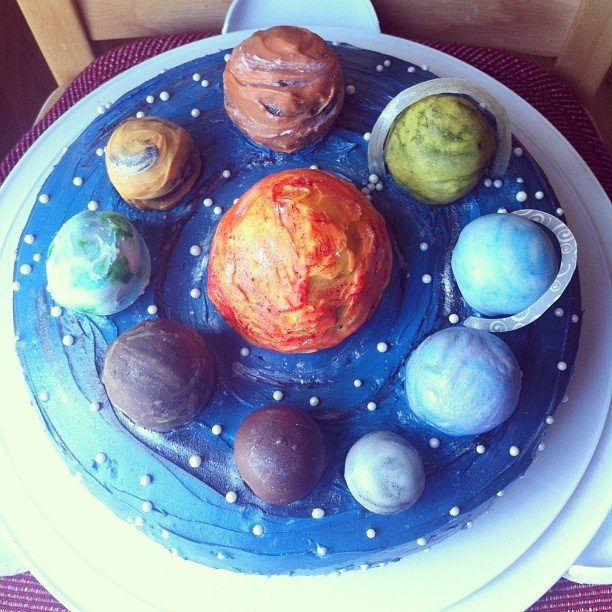
Of course, when she saw me adding the little pearl balls for the stars, she asked me to make some constellations. Seriously? I just busted my hump making these planets. Sheesh! I did try to make some, but it wasn’t really that easy. Those little pearl candies are very slippery creatures. I also couldn’t find a way to make edible rings for the planets, so I had to resort to vellum paper from my scrapbooking stash. Other than that everything was edible.

The inside was a just a white cake (from a box) that I filled with some homemade dulce de leche and strawberries. I got lots of props on the cake the day of the party. I was able to make it all the way through to the blowing out of the candles when out of nowhere, I got slammed with a stomach virus. I had to quietly slip away from the party and spent the rest of the day in bed. Not cool.

At least this time, the virus did not cause me to pass out face first and smash up my face. But it did put a kink in my Father’s Day plans. I was not able to indulge in all the yummy food my mom made for brunch.
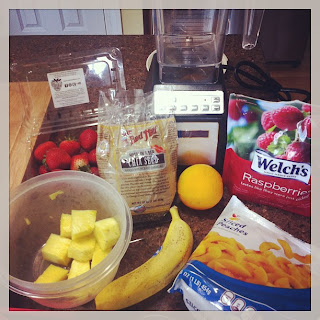
Now I am almost back to my regular eating. I am trying to keep it healthy. But I am dying to get back to baking some yummy treats. Next week is my last week of work, after that I will have more free time to do the things I love. So stay tuned!
Related Posts




Subscribe for New Racipies
Get mental health tips, updates, and resources delivered to your inbox.
Are Green Beans Acidic? Green Beans for Acid Reflux

If you are someone who struggles with acid reflux, choosing the right foods can be a game-changer in managing your symptoms. Many people wonder, “Are green beans acidic?” or “Can they help with acid reflux?”
In this comprehensive guide, we’ll explore the acidity of green beans, their potential benefits for acid reflux, and how to incorporate them into your diet.
Understanding Acid Reflux
Before diving into green beans, it’s essential to understand what acid reflux is. Acid reflux occurs when stomach acid flows back into the esophagus, causing symptoms like heartburn, chest pain, and a sour taste in the mouth.
Chronic acid reflux is known as gastroesophageal reflux disease (GERD). Certain foods, obesity, smoking, and other lifestyle factors can trigger the condition.
Are Green Beans Acidic?
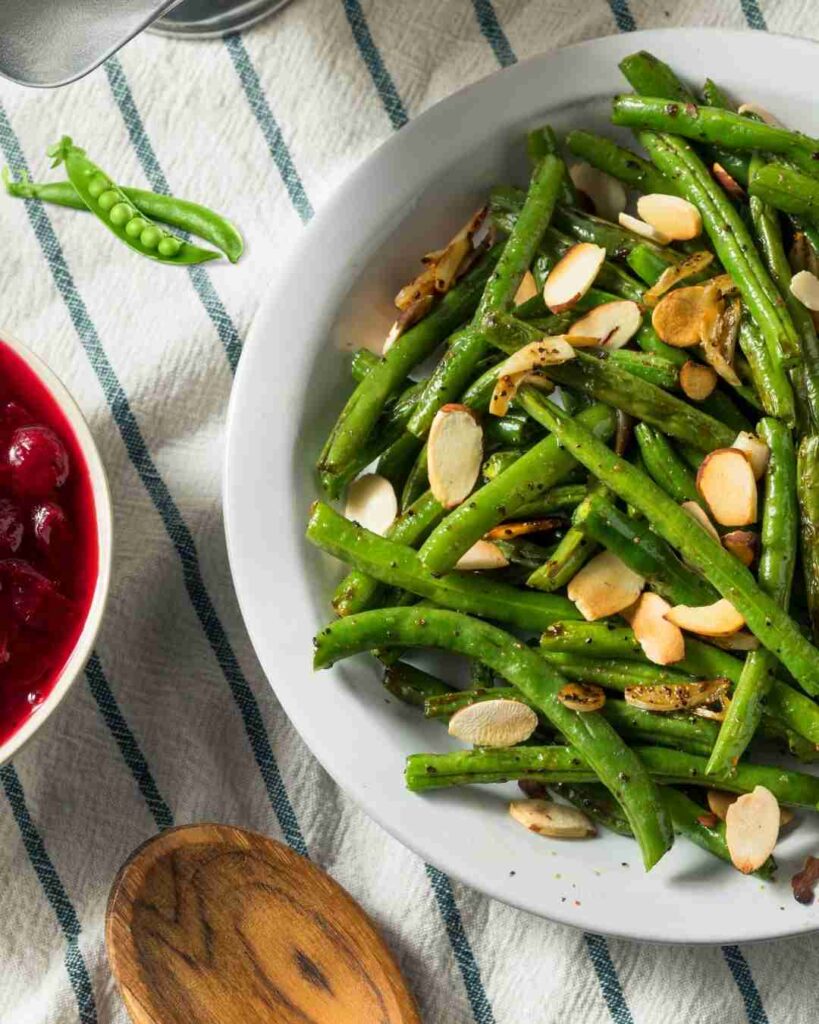
Green beans are slightly acidic but fall on the lower end of the acidity scale. The pH of green beans ranges between 5.5 and 6.5, making them mildly acidic to nearly neutral. To put this into perspective, highly acidic foods like lemons have a pH of around 2, while neutral water has a pH of 7.
Their mild acidity makes green beans a safe choice for people with acid reflux, as they are unlikely to trigger symptoms. Additionally, green beans are packed with nutrients, making them a healthy addition to most diets.
Related to Read: Are Yellow Beans Acidic?
Nutritional Profile of Green Beans
According to research, green beans are not only low in acidity but also rich in essential nutrients. Here’s a breakdown of their nutritional value:
- Low in Calories: A cup of cooked green beans contains approximately 35 calories, making them a weight-friendly choice.
- High in Fiber: Green beans are an excellent source of dietary fiber, which aids digestion and helps prevent acid reflux by promoting healthy gut function.
- Rich in Vitamins and Minerals: They contain vitamins A, C, and K, as well as folate, iron, magnesium, and potassium.
- Antioxidants: Green beans are a good source of antioxidants like flavonoids and carotenoids, which combat inflammation and oxidative stress.
How Green Beans Help with Acid Reflux?
Green beans can be particularly beneficial for people with acid reflux due to the following reasons:
1. Low Acid Content
As mentioned earlier, green beans have a mild acidity level, which reduces the risk of triggering acid reflux symptoms. Unlike tomatoes or citrus fruits, they are unlikely to cause discomfort.
2. High Fiber Content
Dietary fiber is crucial for digestive health. It helps regulate bowel movements and reduces pressure on the stomach, preventing the backflow of acid into the esophagus. Including fiber-rich foods like green beans can help manage acid reflux effectively.
3. Low Fat Content
High-fat foods are known to relax the lower esophageal sphincter (LES), the muscle that prevents stomach acid from flowing back into the esophagus. Green beans are naturally low in fat, making them a reflux-friendly option.
4. Anti-Inflammatory Properties
The antioxidants in green beans help reduce inflammation in the digestive tract, providing relief from symptoms like heartburn and irritation.
Related to Read: Are Black Beans Acidic? A Nutritional Powerhouse or a Trigger?
Tips for Incorporating Green Beans into an Acid Reflux Diet
Here are some practical ways to add green beans to your meals while keeping acid reflux at bay:
1. Steamed Green Beans
Steaming green beans is one of the healthiest cooking methods. It retains their nutrients and avoids adding extra fats or spices that could trigger reflux.
2. Green Bean Salad
Combine steamed green beans with other low-acid vegetables like cucumbers, spinach, and carrots for a refreshing salad. Use olive oil and herbs as a dressing instead of acidic ingredients like vinegar.
3. Stir-Fry with Lean Protein
Create a quick and healthy stir-fry using green beans, chicken, or tofu. Opt for low-sodium soy sauce or coconut aminos to keep it reflux-friendly.
4. Soups and Stews
Add green beans to soups and stews made with low-acid ingredients. Avoid tomato-based broths and opt for clear vegetable or chicken stock.
5. Roasted Green Beans
Roasting green beans with a drizzle of olive oil and a sprinkle of salt and pepper can enhance their flavor without causing reflux symptoms.
Author Tip: 7-Day Meal Plan For Gastritis
Foods to Pair with Green Beans
When planning your meals, consider pairing green beans with other acid reflux-friendly foods for a well-rounded diet. Some options include:
- Whole Grains: Brown rice, quinoa, and oatmeal.
- Lean Proteins: Skinless chicken, turkey, fish, and tofu.
- Low-Acid Fruits: Bananas, melons, and apples.
- Other Vegetables: Broccoli, zucchini, and asparagus.
Foods to Avoid with Acid Reflux
While green beans are safe, some foods can exacerbate acid reflux symptoms. Avoid combining green beans with:
- Fried Foods: High-fat, fried items can worsen reflux.
- Spicy Foods: Ingredients like chili peppers and hot sauce are common triggers.
- Acidic Foods: Tomatoes, citrus fruits, and vinegar should be consumed cautiously.
- Carbonated Beverages: Soda and sparkling water can increase pressure in the stomach, leading to reflux.
Author Tip: 7 Kinds of Foods to Avoid with GERD
Precautions and Considerations
Although green beans are generally safe for acid reflux sufferers, individual reactions may vary. Here are some tips to keep in mind:
- Portion Control: Overeating, even healthy foods, can put pressure on the stomach and cause reflux. Stick to moderate portions.
- Cooking Methods: Avoid frying or cooking with heavy oils and spices.
- Personal Triggers: Pay attention to how your body reacts to green beans and other foods. Keep a food diary to identify triggers.
FAQs
Are green beans high in acid?
No, green beans are not high in acid. They are considered a low-acid vegetable and are generally safe for people with acid reflux or those trying to avoid acid-forming foods.
Are green beans good for acid reflux?
Yes, green beans are good for acid reflux. They are alkaline-forming and low in acid, which helps soothe the digestive system and can reduce acid reflux symptoms. They are gentle on the stomach and easy to digest.
Is chana acidic or alkaline?
Chana (chickpeas) is considered alkaline-forming after digestion, even though it is mildly acidic in its raw form. Its fiber content and nutrient profile make it a beneficial food for maintaining a balanced pH in the body.
Which green vegetables are acidic?
Some green vegetables like spinach, kale, and certain types of lettuce can be mildly acidic, though they are generally considered less acidic than fruits or processed foods. However, their overall effect on the body is usually alkaline-forming once digested.
Conclusion
So, are green beans acidic? While they are mildly acidic, their pH level makes them a reflux-friendly food for most people. Rich in fiber, vitamins, and antioxidants, green beans can be a valuable addition to your diet, especially if you suffer from acid reflux.
Incorporate them into your meals using reflux-safe cooking methods and pair them with other low-acid foods for optimal digestive health.
By making mindful dietary choices and including green beans in your meal plan, you can take a significant step toward managing acid reflux and improving your overall well-being. Remember to consult a healthcare professional or dietitian if you have severe or persistent symptoms.
Related Posts



Subscribe for New Racipies
Get mental health tips, updates, and resources delivered to your inbox.