Are Dried Beans Acidic? What You Need to Know
Dried beans are a staple in many diets due to their high nutritional value, affordability, and versatility. They are rich in protein, fiber, vitamins, and minerals, making them a popular choice for vegetarians, vegans, and anyone looking to improve their overall health. However, if you suffer from acid reflux or gastroesophageal reflux disease (GERD), you may be wondering whether dried beans are acidic and whether they could trigger your symptoms.
In this article, we’ll explore the pH level of dried beans, how they relate to acid reflux, and whether or not they should be part of your diet if you have digestive issues. We’ll also provide insights into the best ways to enjoy dried beans while managing acid reflux.
What Are Dried Beans?
Dried beans are legumes that have been harvested and left to dry. Common varieties include kidney beans, black beans, chickpeas, lentils, and pinto beans. These beans are a rich source of plant-based protein, fiber, iron, and folate. Dried beans are commonly soaked before cooking, which helps reduce cooking time and enhance their digestibility. Once cooked, they can be used in a wide variety of dishes, from soups to salads and stews.
Are Dried Beans Acidic?
To understand whether dried beans are acidic, we need to examine their pH level. The pH scale measures how acidic or alkaline a substance is. On the pH scale, 7 is neutral, values below 7 are acidic, and values above 7 are alkaline.
Most dried beans are considered mildly acidic to neutral, with a pH that typically falls between 5.5 and 6.5. This makes them slightly acidic, but not extremely so. The acidity of beans can vary slightly depending on the variety and how they are prepared, but in general, they are less acidic than many other foods like citrus fruits or tomatoes.
Common pH levels of dried beans:
- Kidney beans: pH 6.0
- Black beans: pH 5.5
- Chickpeas: pH 6.0
- Pinto beans: pH 6.0
Since beans are mildly acidic, they are less likely to trigger acid reflux compared to more acidic foods. However, for some individuals with sensitive digestive systems, beans may cause discomfort due to their high fiber content or their tendency to produce gas.
Dried Beans and Acid Reflux
Acid reflux occurs when stomach acid flows backward into the esophagus, leading to symptoms such as heartburn, chest pain, and regurgitation. For people suffering from acid reflux or GERD, managing diet plays an essential role in controlling symptoms. It’s important to know whether certain foods, like dried beans, can trigger or alleviate acid reflux.
How Dried Beans Affect Acid Reflux:
While dried beans are mildly acidic, they are not considered a common trigger for acid reflux. In fact, beans have several properties that may help in managing acid reflux:
- High Fiber Content:
- Dried beans are an excellent source of soluble fiber, which can help regulate digestion and prevent constipation. Proper digestion may help reduce the likelihood of acid reflux, as delayed digestion can contribute to the production of excess stomach acid.
- Low Fat Content:
- Dried beans are naturally low in fat, which makes them less likely to trigger acid reflux symptoms. High-fat foods, particularly fried or greasy foods, are known to relax the lower esophageal sphincter, allowing stomach acid to travel up into the esophagus.
- Alkalizing Effect:
- While beans themselves are mildly acidic, they have an alkalizing effect on the body once digested. This can help neutralize excess acid in the stomach and esophagus, which is beneficial for acid reflux sufferers.
- Protein Source:
- Beans are a good plant-based protein source, and protein-rich foods are generally considered less likely to exacerbate acid reflux when compared to highly acidic or fatty meats.
However, for some individuals, beans can still cause discomfort, particularly if they are not properly cooked or if you have a sensitivity to certain fibers. Beans contain oligosaccharides, a type of carbohydrate that can cause gas and bloating, which may lead to discomfort in people with sensitive digestive systems. This can sometimes exacerbate acid reflux symptoms indirectly by increasing abdominal pressure.
Author Tip: 7 Kinds of Foods to Avoid with GERD
Managing Acid Reflux with Dried Beans
If you have acid reflux or GERD and wish to include dried beans in your diet, there are several tips to help minimize the risk of discomfort:
- Soak Beans Before Cooking:
- Soaking dried beans before cooking helps break down some of the oligosaccharides responsible for gas production. This can make beans easier to digest and reduce the likelihood of bloating or discomfort.
- Cook Beans Thoroughly:
- Always cook beans thoroughly to ensure they are easy to digest. Undercooked beans may be harder on the digestive system, leading to gas and bloating.
- Combine Beans with Alkaline Foods:
- Pair dried beans with alkaline foods such as spinach, cucumbers, or bananas to help neutralize any potential acidity and support digestion.
- Limit Portion Size:
- If you are sensitive to beans, it’s best to consume them in smaller portions. Eating large amounts of beans in one sitting can put extra pressure on your digestive system and exacerbate acid reflux symptoms.
- Consider Bean Varieties:
- Some beans may be easier to digest than others. For example, lentils and split peas tend to cause less gas than kidney or black beans and may be a better choice for individuals with acid reflux.
Author Tip: 7-Day Meal Plan For Gastritis
Scientific Research on Beans and Acid Reflux
While there is limited direct research on the effects of dried beans on acid reflux, studies examining the role of fiber-rich foods in digestive health support the idea that beans can aid in reducing symptoms.
Study 1: The Role of Fiber in Digestive Health
A study published in the American Journal of Gastroenterology found that a high-fiber diet, including beans, can improve symptoms of acid reflux by promoting healthy digestion and reducing constipation. The research also suggests that fiber-rich foods help prevent acid reflux by improving the function of the lower esophageal sphincter.
Study 2: Plant-Based Diets and GERD
Another study conducted by the Journal of the Academy of Nutrition and Dietetics indicated that plant-based diets, which include legumes like beans, may help reduce acid reflux symptoms. The research highlighted the potential benefits of fiber, antioxidants, and other nutrients found in legumes.
Conclusion
To answer the question, are dried beans acidic?: While dried beans are mildly acidic, they are not highly acidic and are not considered common triggers for acid reflux. In fact, beans have a range of benefits for digestive health, including being a rich source of fiber, protein, and antioxidants. When prepared and consumed properly, beans can be an excellent addition to a reflux-friendly diet.
If you experience discomfort after eating beans, consider soaking and cooking them thoroughly, starting with small portions, and combining them with other alkaline foods. As always, it’s a good idea to consult with a healthcare provider before making any significant changes to your diet, especially if you have chronic acid reflux or GERD.
Chocolate Raspberry Rice Krispie Treats


I found these great new Hershey’s Raspberry Hugs at Target the other day. They are milk chocolate kisses hugged by a raspberry flavored white cream. Hmmm? Chocolate and raspberry? Why, yes I took a bag home. I was smart enough not to open the bag till I was ready to bake with them. As soon as it was open the little vultures that reside in my home were circling the kitchen waiting for me to throw them some. My two year old really liked them. He kept asking for more “chocoleelee”. That is what he calls chocolate. Most of his other words he enunciates very well, but it’s cute when he mispronounces some.

I was really happy with the way my Candy Cane Hot Chocolate Rice Krispie Treats came out with the Candy Cane Kisses, so I employed the same method. I used Cocoa Krispies and hot chocolate in the mix.

I just chopped up the Raspberry Hugs into small pieces with a knife. I might have eaten a few pre-cut ones.

I made some of the Rice Krispie Treats into bars and decorated them with Wilton’s red and white candy melt and sprinkled them with some cute little heart sprinkles I found in the $1 bins at Target.

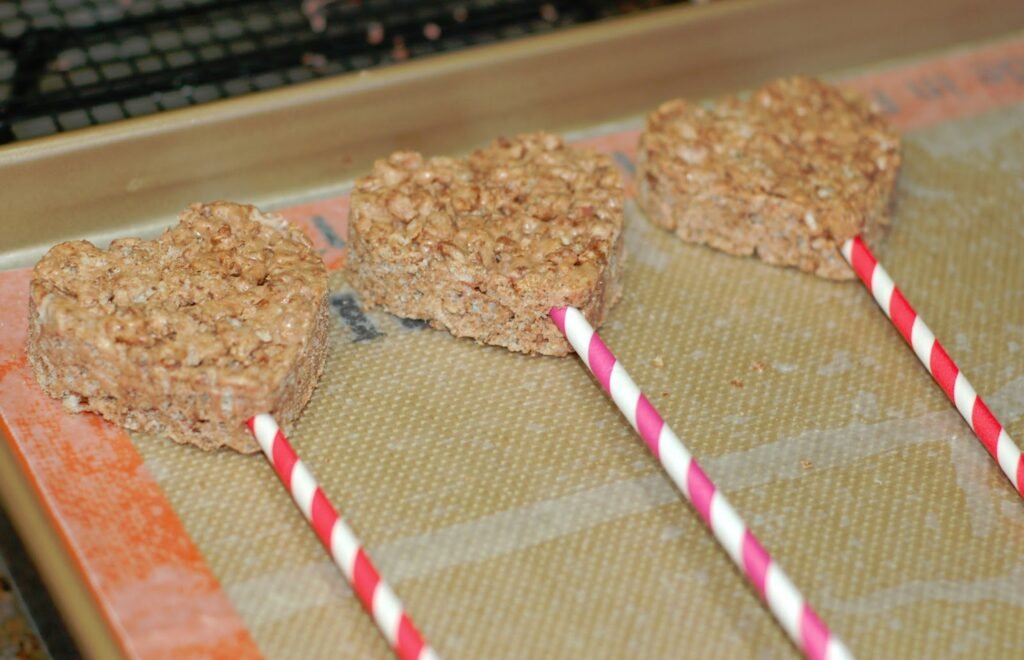
But I also wanted to create something a little more festive to Valentine’s Day coming up. I pulled out my Wilton’s 3 inch heart cookie cutter and cut some of the treats into heart shapes.

And put them on some striped paper straws and decorated them with some red and white candy melt also. I used Wilton’s #5 tip to pipe in the outline and fill in, then I used a #2 tip to write the words.
This is great for a party at your kids school or just for your loved ones at home. A little something extra special is always nice to receive.

Chocolate Raspberry Rice Krispie Treats
by The Sweet Chick
Prep Time: 10-15 minutes
Cook Time: 5 minutes
Keywords: no bake dessert snack rice krispies hot chocolate Hershey’s Raspberry Hugs chocolate
Ingredients (24 bars)
For the treats
- 4 tablespoons butter
- 1 bag (10 oz.) mini marshmallows
- 1/2 cup hot chocolate mix
- 6 cups Cocoa Krispie Cereal
- 1 cup chopped, Hershey’s Raspberry Hugs
For the topping
- Wilton’s red candy melt
- Wilton’s white candy melt
- heart sprinkles
Instructions
For the treats
In a large sauce pan, melt butter and marshmallows over low heat. Stir until completely melted.
Remove from heat and add hot chocolate mix. Stir until completely mixed.
Then add the Cocoa Krispie cereal and chopped Raspberry Hugs. Mix until all is well incorporated.
Then pour the mixture into a greased 9 x 13 pan or a cookie sheet and spread it evenly with a piece of waxed paper.
Place in fridge to cool and set.
For the topping
Melt red and white candy melt according to instructions on package and drizzle over the cooled treats using Ziplock bags with the tips cut off or Wilton’s disposable decorating bags with a Wilton #5 cake decorating tip.
Then add sprinkles before the candy melt hardens.
Once candy melt has set, cut treats into squares and keep in an airtight container.