Are Pistachios Healthy? Nutrition & Health Benefits
Are you looking for a healthy snack that is full of nutrients and comes with many health benefits? Well, among the array of choices, pistachios stand out. Now, you might wonder, are pistachios truly a healthy option?
Pistachios are full of nutrients such as Calcium, Vitamin B6, Vitamin C, Iron, Magnesium, potassium, etc. And as for the health benefits, it is high in antioxidants, helps you lose weight, promotes various blood health conditions, and reduces many heart-related problems.
That’s not all. The above information is just an overview. If you are willing to learn more about pistachios, stay with us.
Are Pistachios Healthy?
Yes, pistachios are a healthy food. They are a good source of protein, fiber, healthy fats, antioxidants, and vitamins and minerals.
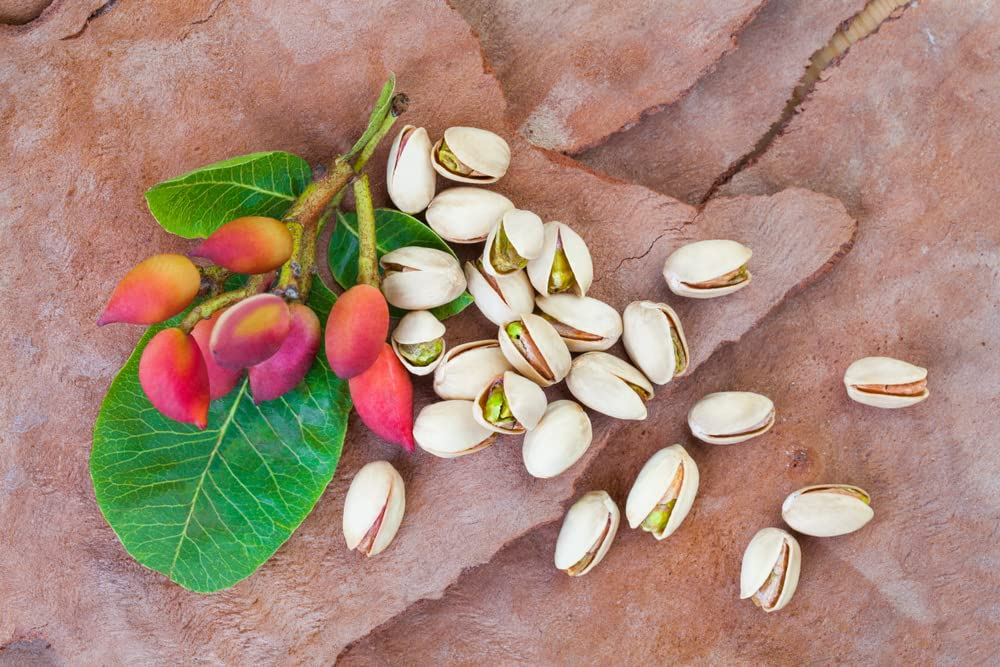
Pistachios are flooded with nutrition which is good for your body. It does not just contain protein and carbohydrates. It’s also a great source of calories, fiber, fat, thiamine, manganese, vitamin b6, calcium, potassium, phosphorus, and copper.
| Nutrient | Amount per 100 grams | Percent Daily Value (%DV) |
| Calories | 557 | 28 |
| Fat | 47.4 grams | 73% |
| Saturated fat | 6.4 grams | 32% |
| Polyunsaturated fat | 11.9 grams | – |
| Monounsaturated fat | 28.2 grams | – |
| Sodium | 95 milligrams | 4% |
| Carbohydrates | 27.3 grams | 9% |
| Fiber | 10.6 grams | 42% |
| Sugar | 8.2 grams | |
| Protein | 20.7 grams | 41% |
| Vitamin A | 0% | – |
| Vitamin C | 0% | – |
| Calcium | 136 milligrams | 14% |
| Iron | 4.2 milligrams | 23% |
| Potassium | 1072 milligrams | 31% |
| Magnesium | 292 milligrams | 73% |
| Phosphorus | 456 milligrams | 45% |
| Manganese | 2.2 milligrams | 96% |
| Copper | 1.6 milligrams | 89% |
| Thiamin | 0.8 milligrams | 53% |
| Vitamin B6 | 1.1 milligrams | 55% |
In hundred grams of pistachio, you will get this much nutritious value; the main thing is the calories and protein you are getting, which are respectively 557 and 20.7 g.
These percentages are based on “Reference Daily Intake.” These help you to maintain the proper blood and hemoglobin regulation.
There must be many benefits for all those nutrients, right? Let’s take a look at that!
Pistachio Health Benefits
The benefits list of pistachios is long, and this will take some time. Pistachios have many benefits that help keep your body healthy, lose weight, and keep you in shape.
Besides, preventing diseases, maintaining regular blood circulation, and building muscle is also on the benefits list.
Did I mention the other benefits? Well, let’s get into it.
Rich in Nutrients
As discussed in the previous section, pistachios contain various nutrients, such as thiamine, manganese, vitamin b6, calcium, potassium, phosphorus, and copper.
Thiamine is a vitamin b-1, which helps your body consume energy from all other nutrients. Also, it maintains the development of your blood cells.
On the other hand, manganese, calcium, potassium, phosphorus, and copper help your body to,
- Increase and development of tissue, bones, proper and hormones.
- Proper brain function and nerve system.
- Build strong muscles and repair damaged cells.
- Prevent high blood pressure and diabetes.
- Regulate proper heartbeat.
- Maintain and increase the immune system and blood function.
Besides these, there is more!
High In Antioxidants
Do you know antioxidants can reduce the risk of cancer or heart diseases? Or any diseases?
As we know, you will find lutein, γ-Tocopherol, and zeaxanthin in the pistachios. Gamma tocopherol helps reduce the risks of diseases and also minimizes the possibility of brain disorders such as Alzheimer’s.
On the other hand, lutein and zeaxanthin are great for the health of your eyes. Those improve your visual sensitivity to the eyes, enhance vision sharpness, protect your eye tissues from sunlight damage, and so on.
Low In Calories
Usually, nuts are filled with high calories. But pistachios have low calories compared to other nuts in this category.
28 grams of pistachios contain;
- One hundred fifty-nine calories. Which is very low, 20%, compared to other nuts.
- Contain 20% of the weight.
- A high amount of amino acid helps your body dilate blood vessels.
Aid Weight Management
Pistachios can help you in the journey of weight management. Those can help you gain weight and even lose weight.
Let’s see first how it can help you lose weight. As we know, pistachios have fiber and protein. What these do is give you a feeling of fullness. And you don’t have the urge to eat more.
A study shows that people who eat pistachios regularly have lower body mass index. One of the reasons for this could be that the fat item doesn’t release from the pistachios wall. It results in not digesting the fat.
On the other hand, pistachios can also be a reason for gaining weight. As they are a go-to snack item, you can eat them in large amounts.
Even though they contain fewer calories, eating more than what you should cause you to consume too many calories. If you cannot lose those calories, you might gain weight.
Promote Blood Health
Pistachios help your blood health on many levels, such as blood sugar control, improved blood pressures level, lower cholesterol level, and blood vessel health.
A study shows that pistachios help the good cholesterol to increase and bad cholesterol to decrease. It also helps improve the blood pressure level.
Besides, pistachios have endothelium in them. And guess what! Endothelium reduces vasodilation which results in decreasing blood flow, which results in promoting blood vessel health.
That’s not all! Antioxidants in the pistachios help lower the blood sugar level and overall blood sugar health.
High In Protein For Vegans And Vegetarians
In 28 grams of pistachios, there are 6 grams of protein. Besides, it contains a good amount of amino acids, making it perfect for vegans and vegetarians.
Pistachios provide enough calories and protein to make you feel full. And give them the energy to go through. As a bonus, it helps manage their weight.
Important For Heart Health
As we know, it contains amino acids, which lowers cholesterol level. And that results in reducing the possibility of heart diseases such as heart attack.
Pistachios are also filled with fiber, which makes them the perfect snack for a heart-healthy option.
Reduce Colon Cancer Risk
Do you know pistachios can reduce colon cancer risk as well? It’s true. As it contains high fiber, it can help lower cholesterol and reduce the risk of colorectal and colon cancer.
Besides, it can help you lose and maintain a healthier weight over time.
Beneficial For Gut Health
Improving gut health is one of the most significant benefits of pistachios. First, it contains a high amount of fiber and moves your gut undigested.
Therefore, there are gut bacteria that turn them into fatty acids. That helps to reduce and improve the digestive system and other heart diseases.
Besides, it also increases the number of good bacteria, which pushes out harmful bacteria. This maintains the balance and makes your gut healthier.
What’s The Healthiest Way To Eat Pistachios?
Pistachios are great as a snack containing vitamin E, B vitamins, copper, and iron. And it also helps with mindfulness and maintaining weight. But there are some ways to consume this:
- You can make pesto with it. Then eat this with fish bread or salad or trail mix.
- Use it as a nut-based crust with cream pie, especially coconut lime cream pie.
- Crushed pistachios in muffins or banana bread and also cookies.
- Pesto mixed with olive oil and fresh basil.
- Use as salad toppers.
You can follow these to consume pistachios more healthily.
Pistachio Side Effects
We have already discussed all the nutrition facts and how pistachios can be beneficial for your body. But there are some side effects also that we should consider.
One of the significant side effects is high blood pressure. Besides, taking large amounts of pistachios can cause high blood sodium levels, hypertension, and fainting.
As we know, pistachios contain a high level of fiber. It can directly affect your digestive system, causing allergies, nausea, and itchiness.
Another significant side effect is inducing the risk of kidney stones, weight gain, increased risk of heart disease, and bowel problems. Also, high manganese levels in pistachios can be problematic for pregnant women.
So, be careful while consuming pistachios and don’t take too much all at once.
FAQs
Are pistachios good for weight loss?
Yes, pistachios are good for weight loss. Pistachios are full of protein and calories. So, consuming these can give you the feeling of fullness and lead you to consume less food.
Are pistachios fattening?
Yes, pistachios can be fattening if you take too many pistachios. Pistachios contain a high amount of calories and fat. So if you cannot lose those calories, this might cause fattening.
Do pistachios cause constipation?
No, pistachios don’t cause constipation. As we know, pistachios are rich in fiber, easing the process of constipation.
How many pistachios a day to lower cholesterol?
There is no exact amount of how many pistachios you should take. But you can take three to four ounces or two to three pistachios daily, lowering cholesterol levels.
Conclusion
We hope the answer to the question, are pistachios healthy or not. Pistachios are rich in nutrients such as thiamine, manganese, vitamin b6, calcium, potassium, phosphorus, and copper.
Pistachios also come with many health benefits. It can help you improve your weight management, promote blood health and reduce the risk of many diseases. Though, don’t take too many pistachios, which can lead to many side effects.
Good luck!
Is Celery Acidic? Celery for Acid Reflux: Good or Bad?

Celery, a staple in many diets, is widely recognized for its crunch, low calorie count, and health benefits. But for those suffering from acid reflux or GERD (gastroesophageal reflux disease), the question arises: “Is celery acidic? Is celery for acid reflux a good choice or a potential trigger?” In this article, we will dive into the pH level of celery, its potential effects on acid reflux, and how to incorporate it into a reflux-friendly diet. By the end, you’ll have a clear understanding of whether celery can be your ally in managing acid reflux.
Is Celery Acidic? Understanding Its pH Level
Celery is classified as an alkaline food, with a pH level ranging from 5.7 to 6.0. While not as alkaline as some other vegetables, celery is still considered a low-acid option. Here’s a quick comparison:
| Food Item | pH Range | Acidity Level |
| Celery | 5.7–6.0 | Low Acid/Neutral |
| Spinach | 6.5–7.0 | Alkaline |
| Cucumber | 6.0–7.0 | Alkaline |
| Tomatoes | 4.0–4.6 | Alkaline |
Celery’s alkaline nature makes it a popular choice for individuals looking to balance their diet and reduce acidity. Its ability to help neutralize stomach acid has made it a go-to food for those managing acid reflux.
Related to Read: Is Bok Choy Safe for Acid Reflux?
Nutritional Benefits of Celery: A Powerhouse of Health
Celery isn’t just about its alkalinity; it’s a nutrient-rich vegetable offering numerous health benefits:
- High Water Content: With over 95% water, celery keeps you hydrated and aids in digestion.
- Rich in Antioxidants: Contains flavonoids, beta carotene, and vitamin C, which combat oxidative stress.
- Dietary Fiber: Promotes gut health and regular bowel movements.
- Low in Calories: A perfect snack for those looking to manage their weight.
- Anti-Inflammatory Properties: Contains phytonutrients that may reduce inflammation in the body.
Can Celery Help with Acid Reflux? Exploring Its Impact
Celery is often recommended as a reflux-friendly food due to its alkalinity and digestive benefits. Here’s how celery might help:
1. Neutralizes Stomach Acid
The alkaline nature of celery can help balance stomach acid levels, reducing the likelihood of acid reflux symptoms.
2. Supports Digestion
Celery’s fiber content aids in smooth digestion, preventing issues like bloating and indigestion that can exacerbate acid reflux.
3. Low-Fat Content
High-fat foods can trigger acid reflux by relaxing the lower esophageal sphincter (LES). Celery, being naturally low in fat, avoids this problem.
4. Hydration
The high water content in celery helps dilute stomach acid, potentially preventing reflux episodes.
Related to Read: Is Cabbage Juice Acidic?
How to Include Celery in a Reflux-Friendly Diet?
To maximize celery’s benefits while minimizing any potential discomfort, consider these tips:
1. Eat It Raw
Raw celery retains its crunch, nutrients, and alkalinity. Pair it with a reflux-safe dip like hummus.
2. Add to Smoothies
Blend celery with alkaline fruits like bananas and spinach for a refreshing, reflux-friendly smoothie.
3. Incorporate into Soups
Cooking celery in low-acid soups can make it easier to digest without compromising its benefits.
4. Avoid High-Acid Pairings
Skip pairing celery with acidic ingredients like tomatoes or citrus-based dressings.
5. Drink Celery Juice
While slightly less fiber-rich, celery juice is another way to enjoy its alkalinity. Start with small servings to gauge your tolerance.
Author Tip: 7-Day Meal Plan For Gastritis
Potential Risks of Celery for Acid Reflux
Though celery is generally well-tolerated, it’s not entirely risk-free:
- Bloating: Excessive consumption may cause bloating in sensitive individuals.
- Allergic Reactions: Rarely, celery can trigger allergic responses in some people.
- Pesticide Residue: Opt for organic celery or wash thoroughly to avoid exposure to pesticides.
Author Tip: 7 Kinds of Foods to Avoid with GERD
Celery vs. Other Vegetables for Acid Reflux
How does celery compare to other vegetables in managing acid reflux?
| Vegetable | Acidity Level | Reflux-Friendly |
| Celery | Low Acid | Yes |
| Spinach | Alkaline | Yes |
| Broccoli | Alkaline | Yes |
| Onions | Acidic | No |
Celery stands out as a versatile, reflux-friendly vegetable, suitable for most diets.
Related to Read: Are Broccoli Acidic?
FAQs About Celery and Acid Reflux
1. Is celery good for acid reflux?
Yes, celery is alkaline and can help neutralize stomach acid, making it a good choice for acid reflux sufferers.
2. Can celery juice worsen acid reflux?
Unlikely, but individual tolerances vary. Start with small amounts to ensure it doesn’t trigger symptoms.
3. How much celery should I eat daily for acid reflux?
Aim for 1–2 stalks or half a cup of chopped celery daily as part of a balanced diet.
4. Are cooked celery and raw celery equally beneficial?
Both forms are beneficial, but cooking celery can make it easier to digest for some people.
5. Can celery replace medication for acid reflux?
While celery may alleviate symptoms, it’s not a substitute for prescribed medication. Always consult a healthcare provider for severe or persistent reflux.
Conclusion: Is Celery a Good Choice for Acid Reflux?
Celery’s low acidity, high water content, and digestive benefits make it an excellent option for managing acid reflux. Its versatility allows for easy incorporation into various meals, whether raw, cooked, or juiced. While individual results may vary, most people with acid reflux can enjoy celery without concern. By adding celery to your diet mindfully, you can take a step toward better digestive health and overall well-being.