Blueberry Basil Vodka Gimlet
Who was it that said you could kick a habit by avoiding it for 21 days? I believe it was Benjamin Franklin. Wise man. I am not so wise, and even less strong of will, so it’s taken me this many years to heed his words. But I’ve finally gone and done it: I think I’ve kicked my chocolate habit. Huzzah!
Instead, I’ve funnelled my sweet tooth into fruit. With a passion. As in, I’m running high on fructose, like a hummingbird. What do they call this type of behavior again? Sublimation perhaps? (I used to know all this stuff back in high school, when Jungian dream analysis and Freudian psychoanalytic mumbo jumbo fascinated me. Nowadays, I choose to direct my attention towards resisting substances causing weight gain. Who said you become wiser the older you get?) I’m not sure if it’s really an improvement (I was reading an article the other day about how eating fruit is just as bad as eating candy. Of course, I found it on one of those websites that sensationalizes everything—I really need to unsubscribe from their email lists) but it’s certainly better for me psychologically.
With all the excess of fruit in the apartment, I’ve been finding non-dessert-like ways of incorporating it into my diet. I absolutely love fruit in salads and sauces (peach salsa!), but of course, I can’t ignore the fact that cocktails make the perfect vessels for truly capturing their essence.

At what point is a drink no longer the drink it purports to be? Because I’m pretty certain that real gimlets contain neither lemon juice nor vodka nor sparkling water nor basil nor blueberry. I’m pretty certain a real gimlet, at least according to authority figures like Raymond Chandler (heck YES), is just a beverage containing gin and lime juice. Half and half, no more no less.
So as far as naming terminology goes, I don’t know how much artistic license I have to call this cocktail thing a gimlet. It’s based on a gimlet recipe; maybe that’s good enough? Or maybe I just need to come up with an original name for it to avoid confusion.
Wherever it stands, I can tell you that it tastes remarkably similar to a certain kombucha flavor I used to be pretty obsessed with. Does that sound weird? Let me try to explain with this play-by-play: when you take a sip, a menthol-like taste sort of hits you first that quickly transitions into an herby, funky tang. It blossoms out, mellows, and leaves behind the very subdued, almost solemn flavor of blueberry. A mishmash of elements, but kind of addictive anyway.
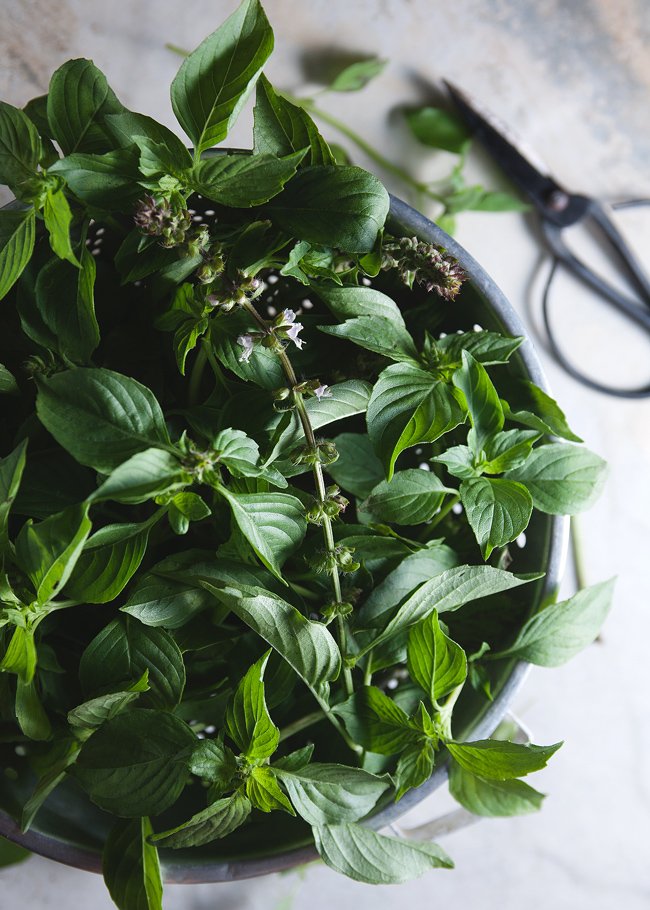
What got me thinking about this drink was actually the bunch of lime basil I’d bought at the farmer’s market. It smelled intoxicatingly of lime and lemongrass and that whole family of summery aromatic sours. I sort of swooned. I don’t know, I guess I just have a soft spot for tart things you know? Anyway, I tried using it in a caprese salad but it was a bit too lime-y, so I decided to turn my thinking towards a drink instead.
Whether you use lime basil or regular basil (or lemon basil! There are literally 10 varieties of basil at my greenmarket.), I don’t think the taste of the drink will be impacted too much. However, I am going to be particular and insist that you try it with vodka rather than gin, which overpowers the rest of the flavors.

As an aside, something kind of freaky happened when I was making the simple syrup, or rather, afterward. I’d just placed a jar of the stuff in the fridge to cool and resumed work at my computer, when I faintly registered the sound of buzzing outside the window. I didn’t really think about it, but the sound soon became a droning that I couldn’t ignore. When I looked out the window, there was a small swarm of bees outside! It was so eerie, because they were all flying about frantically, trying to get past the screen. (Thank god for screens.)
After my mini freakout had subsided, I reasoned, either Beelzebub was hanging around nearby (I watch a lot of scary movies), or there was some scent attracting them to the apartment. It turns out, bees love basil.
Brianne! Basil for your bees!

One year ago: Caponata
BLUEBERRY BASIL LEMON GIMLET
Adapted from Gourmet
Ingredients:
- 4 parts blueberry basil syrup (recipe below)
- 3 parts vodka
- 3 parts fresh squeezed lemon juice
- Seltzer water to top off individual glasses
Directions:
Stir together all the ingredients into a pitcher filled with ice cubes until cold. Strain into individual glasses, filling them up about 3/4 full. Top off with seltzer water and garnish with basil sprigs.
BLUEBERRY BASIL SYRUP
Makes about 2-1/2 to 3 cups
Ingredients:
- 2 cups water
- 1 cup sugar
- Zest from one lemon
- 1 pint blueberries
- 2 cups packed fresh basil sprigs
Directions:
In a medium saucepan, stir together all the ingredients over medium heat until the sugar has melted. Bring the mixture to a boil, then reduce the heat a little and simmer until slightly thickened, about 15 minutes.
Strain the contents into a bowl, pressing hard against the sieve, then discard the solids. After it’s cooled, cover the syrup and store it in the refrigerator until cold.
Are Baby Carrots Acidic? Baby Carrots and Acid Reflux

When managing acid reflux, choosing the right foods is critical to avoiding uncomfortable symptoms like heartburn and regurgitation. If you enjoy snacking on baby carrots, you may wonder: Are baby carrots acidic, and can they fit into an acid reflux-friendly diet?
Baby carrots are a great choice for managing acid reflux because they are low in acid, low in calories, and high in fiber. Additionally, they are a healthy snack that is easy to prepare and eat.
This article dives into the acidity of baby carrots, their nutritional profile, and their potential role in managing acid reflux.
Understanding Baby Carrots
Baby carrots are small, tender carrots that are either naturally grown to be small or cut and shaped from larger carrots. They are prized for their convenience, sweetness, and crunch. Like regular carrots, they are packed with essential nutrients that make them a healthy choice for most diets.
Baby carrots are also low in calories and high in fiber, making them a great snack for those looking to watch their weight. They are also relatively inexpensive and easy to find in most grocery stores.
Author Tip: Are Carrots Good for You?
Are Baby Carrots Acidic?
To answer whether baby carrots are acidic, we need to consider their pH level:
- pH Level of Baby Carrots: Baby carrots have a pH level of around 5 to 6, placing them in the mildly acidic to neutral range. This makes them less acidic compared to many fruits and vegetables, such as tomatoes or citrus fruits.
- Alkaline-Forming in the Body: Despite their mild acidity, carrots are often considered alkaline-forming after digestion. This means they can help balance your body’s pH levels and potentially soothe acid reflux symptoms.
Related to Read: Are Carrot Sticks Acidic?
Nutritional Benefits of Baby Carrots
Baby carrots are a nutrient powerhouse and can provide numerous health benefits, including support for acid reflux management:
1. Rich in Fiber
Fiber aids digestion by promoting regular bowel movements and preventing constipation, which can worsen acid reflux by increasing abdominal pressure. Baby carrots are an excellent source of dietary fiber. Research suggest that fiber is very beneficial for stomach health.
2. High in Vitamin A
Carrots are rich in beta-carotene, which the body converts to vitamin A. This nutrient supports healthy mucous membranes, including the lining of the esophagus, which can be irritated by acid reflux.
3. Low Calorie and Low Fat
Baby carrots are naturally low in calories and fat, making them a light snack that doesn’t put additional strain on the digestive system or trigger reflux symptoms.
4. Hydrating Properties
Baby carrots have a high water content, which can help dilute stomach acid and reduce the likelihood of acid reflux episodes.
Can Baby Carrots Trigger Acid Reflux?
Although baby carrots are generally considered safe and beneficial for those with acid reflux, individual reactions can vary. Here are some factors to keep in mind:
- Portion Size: Eating a large quantity of baby carrots in one sitting may cause bloating or stomach discomfort, which could worsen acid reflux.
- Raw vs. Cooked: Raw baby carrots are crunchy and fibrous, which may be harder to digest for some individuals. Steaming or boiling them can make them gentler on the stomach.
- Acidity Tolerance: While mildly acidic, baby carrots are unlikely to trigger reflux in most people. However, those with severe acid reflux should monitor their symptoms after consumption.
How to Incorporate Baby Carrots into an Acid Reflux-Friendly Diet
Baby carrots can be a versatile addition to your meals or snacks. Here are some tips to enjoy them while minimizing the risk of acid reflux:
1. Snack on Raw or Steamed Carrots
Enjoy baby carrots as a snack on their own or with a reflux-friendly dip like hummus. Steamed carrots are an even gentler option for those with sensitive stomachs.
2. Add to Soups and Stews
Incorporate baby carrots into soups, stews, or broths for added nutrition and flavor. Cooking them softens their texture and makes them easier to digest.
3. Blend into Smoothies
For a nutrient-packed smoothie, blend baby carrots with alkaline fruits like bananas or melons. This can create a refreshing and reflux-friendly drink.
4. Include in Salads
Shred or chop baby carrots into salads made with leafy greens and a light, non-acidic dressing.
Other Reflux-Friendly Vegetables to Pair with Baby Carrots
Pairing baby carrots with other low-acid vegetables can further enhance your diet. Consider adding:
Foods to Avoid When Eating Baby Carrots
To prevent acid reflux, avoid combining baby carrots with common trigger foods such as:
- Spicy dips or sauces
- Acidic dressings, like vinegar-based options
- High-fat dips, such as creamy cheese-based spreads
- Carbonated beverages
Author Tip: 7 Kinds of Foods to Avoid with GERD
Lifestyle Tips for Managing Acid Reflux
In addition to choosing the right foods, consider these tips to manage acid reflux effectively:
- Eat Smaller Meals: Large meals can increase pressure on the lower esophageal sphincter (LES).
- Chew Thoroughly: Take your time to chew baby carrots and other foods well to aid digestion.
- Stay Upright After Eating: Avoid lying down for at least 2-3 hours after meals.
- Elevate Your Head During Sleep: Use a wedge pillow to prevent acid from rising during the night.
- Maintain a Healthy Weight: Excess weight can put pressure on the LES, worsening acid reflux.
Frequently Asked Questions
1. Can baby carrots cure acid reflux?
Baby carrots cannot cure acid reflux but can be part of a balanced diet that helps manage symptoms. Their fiber and low acidity make them a supportive food choice.
2. Are baby carrots better than regular carrots for acid reflux?
Nutritionally, baby carrots and regular carrots are very similar. Both can be included in an acid reflux-friendly diet, and the choice depends on personal preference.
3. How many baby carrots can I eat if I have acid reflux?
Moderation is key. Start with a small serving, such as 5-10 baby carrots, and observe how your body reacts. Gradually increase the portion if tolerated well.
Conclusion: Are Baby Carrots Acidic?
Baby carrots are mildly acidic but generally considered safe and beneficial for individuals with acid reflux. Their low acidity, high fiber content, and nutrient-rich profile make them an excellent choice for snacking or incorporating into meals. By preparing baby carrots in reflux-friendly ways and being mindful of portion sizes, you can enjoy their health benefits without triggering symptoms.
As with any dietary change, monitor your body’s response and consult a healthcare provider for personalized advice if needed. Baby carrots can be a tasty and nutritious ally in your journey to manage acid reflux effectively.