Is Turmeric Acidic? Turmeric and Acid Reflux
Turmeric, often referred to as the “golden spice,” is renowned for its medicinal properties and extensive culinary applications. From spicing up dishes to serving as a natural remedy for inflammation, turmeric has gained a reputation as a superfood.
However, if you’re someone who suffers from acid reflux or GERD (gastroesophageal reflux disease), you might wonder: “Is turmeric acidic, and can it help or worsen acid reflux?”
The good news is that turmeric is not highly acidic and has a pH level close to neutral. Beyond its neutral pH, turmeric’s active compound, curcumin, is well-documented for its anti-inflammatory and digestive-supporting properties, which can help manage acid reflux symptoms when used correctly.
In this article, we’ll explore turmeric’s pH level, its effects on digestion, and how it can be used safely to alleviate acid reflux.
Is Turmeric Acidic or Alkaline?
Turmeric is slightly acidic to neutral, with a pH level of around 6.0 to 7.0. Unlike foods with high acidity, such as citrus fruits or vinegar, turmeric’s pH level makes it less likely to aggravate acid reflux symptoms. In fact, turmeric is often used to balance the digestive system due to its soothing properties.
What makes turmeric unique is that it acts as an alkalizing agent once metabolized by the body, which means it can help neutralize excess stomach acid. This alkalizing effect makes turmeric a valuable addition to the diet for those managing GERD or other acid-related digestive issues.
Related to Read: Is Black Pepper Acidic?
Nutritional Profile and Benefits of Turmeric
Turmeric is more than just a spice; it’s a nutritional powerhouse with numerous health benefits. Here’s what makes turmeric a standout addition to a reflux-friendly diet:
1. Curcumin: The Star Compound
Turmeric’s active ingredient, curcumin, is a potent anti-inflammatory and antioxidant compound. It can help reduce inflammation in the esophagus caused by acid reflux and protect the stomach lining from damage.
2. Rich in Antioxidants
Turmeric is loaded with antioxidants that combat free radicals, reduce oxidative stress, and promote overall gut health.
3. Supports Digestive Health
Turmeric is often used as a digestive aid due to its ability to stimulate bile production, which helps break down fats and promote smoother digestion.
4. Anti-Inflammatory Properties
Chronic acid reflux can lead to inflammation of the esophagus. Turmeric’s anti-inflammatory effects can help soothe this irritation and support the healing process.
5. Natural Antimicrobial
Turmeric has natural antimicrobial properties that can help maintain a healthy gut microbiome by reducing harmful bacteria while promoting beneficial bacteria.
6. Low Caloric Content
Turmeric is low in calories and free of fat, making it a safe and lightweight addition to most diets.
Can Turmeric Help with Acid Reflux?
Turmeric can be beneficial for individuals with acid reflux when consumed in moderation and as part of a balanced diet. Here’s how it may help:
1. Reduces Inflammation
Acid reflux often leads to inflammation of the esophagus. The curcumin in turmeric helps reduce this inflammation, alleviating symptoms like heartburn and discomfort.
2. Soothes the Stomach Lining
Turmeric’s ability to protect the stomach lining can help prevent irritation caused by stomach acid, reducing the severity of reflux symptoms.
3. Promotes Healthy Digestion
By stimulating bile production and supporting the digestive process, turmeric can help reduce bloating and indigestion, which are common reflux triggers.
4. Fights Oxidative Stress
The antioxidants in turmeric protect the esophagus and stomach from oxidative stress caused by acid exposure, promoting tissue repair and overall gut health.
Caution with Excessive Use
While turmeric is generally safe, consuming it in excessive amounts or in concentrated forms (such as supplements) can irritate the stomach lining in some individuals, potentially worsening reflux symptoms. It’s always best to start with small amounts and monitor how your body reacts.
How to Use Turmeric Safely for Acid Reflux Relief?
To reap the benefits of turmeric without aggravating acid reflux, it’s important to use it correctly. Here are some tips:
- Start Small
Begin with small amounts of turmeric (about 1/4 to 1/2 teaspoon) in your meals and gradually increase as tolerated. - Avoid Spicy Combinations
Combining turmeric with spicy foods like chili powder can irritate the stomach. Stick to mild recipes. - Pair with Black Pepper
Adding a pinch of black pepper enhances the absorption of curcumin, making turmeric more effective. However, if you’re sensitive to black pepper, use caution, as it can also trigger reflux in some people. - Consume with Fat
Curcumin is fat-soluble, so consuming turmeric with healthy fats like olive oil, avocado, or coconut milk can improve absorption. - Opt for Golden Milk
Turmeric milk (also called golden milk) is a popular way to consume turmeric. Use almond or oat milk as a base to keep it reflux-friendly. - Avoid Concentrated Supplements
Unless advised by a healthcare provider, avoid high-dose turmeric supplements, as they can irritate the stomach in some individuals.
Turmeric Recipes for Reflux Management
Here are some simple and reflux-friendly ways to incorporate turmeric into your diet:
1. Turmeric Golden Milk
Ingredients:
- 1 cup almond or oat milk
- 1/2 teaspoon turmeric powder
- 1/4 teaspoon cinnamon (optional)
- 1/2 teaspoon honey (optional)
Instructions:
- Heat the milk in a saucepan.
- Stir in turmeric and cinnamon.
- Sweeten with honey if desired.
- Drink warm, preferably before bed, to soothe reflux symptoms.
2. Turmeric Rice
Ingredients:
- 1 cup cooked basmati rice
- 1/2 teaspoon turmeric powder
- 1 teaspoon olive oil
Instructions:
- Mix turmeric into the cooked rice.
- Drizzle with olive oil for a light, flavorful dish.
Related to Read: Is Saffron Rice Acidic?
3. Turmeric Smoothie
Ingredients:
- 1 banana
- 1/2 teaspoon turmeric powder
- 1/2 cup almond milk
- 1/4 teaspoon ginger (optional)
Instructions:
- Blend all ingredients until smooth.
- Serve as a refreshing and reflux-friendly snack.
Frequently Asked Questions About Turmeric and Acid Reflux
1. Is turmeric good for acid reflux?
Yes, turmeric can help manage acid reflux due to its anti-inflammatory and digestive-supporting properties.
2. Can turmeric worsen acid reflux?
In rare cases, excessive consumption of turmeric or concentrated supplements may irritate the stomach lining, worsening reflux symptoms. Always use turmeric in moderation.
3. Is turmeric tea safe for GERD?
Turmeric tea is generally safe for GERD sufferers when consumed in small amounts. Avoid adding spicy or acidic ingredients like lemon.
4. Can turmeric replace medications for acid reflux?
While turmeric can help manage symptoms, it should not replace medications prescribed by your doctor. Always consult a healthcare professional for personalized advice.
5. Are turmeric supplements safe for acid reflux sufferers?
High-dose turmeric supplements may irritate the stomach in some individuals. It’s best to stick to culinary turmeric unless recommended by a healthcare provider.
Final Thoughts
Turmeric is a slightly acidic to neutral spice with powerful anti-inflammatory and antioxidant properties that make it beneficial for managing acid reflux. When used in moderation and paired with reflux-friendly foods, turmeric can help soothe the esophagus, reduce inflammation, and promote healthy digestion.
Whether you’re sipping on turmeric tea, enjoying golden milk, or adding it to your favorite dishes, turmeric is a versatile and natural way to support digestive health.
However, always listen to your body and consult a healthcare professional if you’re unsure about incorporating turmeric into your acid reflux management plan.
Chocolate Ginger Scones with an Egg Nog Glaze


The holidays are not over yet and neither is my obsession with chocolate and ginger.. I hope everyone enjoyed their Christmas celebrations. I know I did. My daughter was quite thrilled that Santa brought what she had asked for and my son could care less about opening gifts or playing with his new toys. But we did get to spend the whole day together just hanging around in our pajamas and having a nice family nap time. I really needed that.

I made these scones to bring to the office and share with my co-workers, but somehow they never left the house. My husband and I ate them all ourselves.

We ate some with our coffee. We ate some with our tea. We ate some for dessert. We ate some for breakfast. They are great anytime.

You can make them with or without the glaze. We tried them both ways and they still had a lot of flavor. They spices are not overly intense, but do play up the cocoa. They chocolate flavor is much less subdued then my Chocolate Ginger Cookies, but these are not meant to be cookies.

I made a very simple glaze to go along with the chocolate and ginger flavors. I used egg nog and powdered sugar.

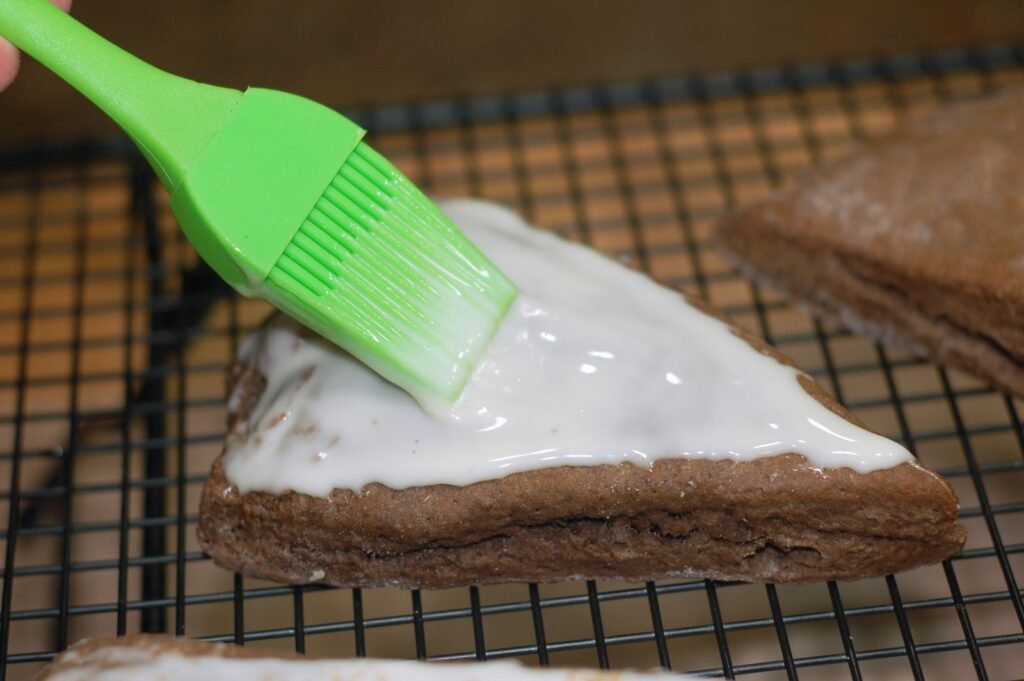
At first I brushed it on with a pastry brush, but then I decided they looked too pretty so I went back and drizzled some more glaze over them to messed them up a bit.
And then to finish them off, I sprinkled the glaze with some cinnamon sugar.
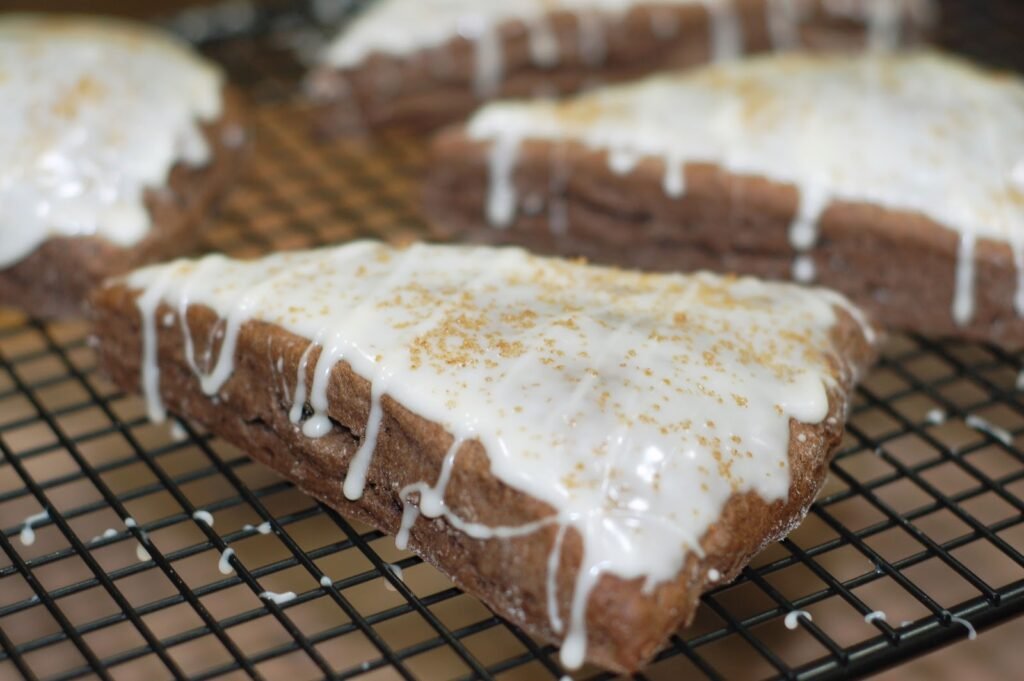
See this one here. It’s calling your name. Come on, take a bite, I won’t tell.
Chocolate Ginger Scones with an Egg Nog Glaze
by The Sweet Chick
Prep Time: 10-15 minutes
Cook Time: 15 minutes
Keywords: bake breakfast dessert snack chocolate ginger egg nog cinnamon Christmas scones winter
Ingredients (8 scones)
For the scones
- 2 cups flour
- 1/3 cup sugar
- 1/4 teaspoon ground cloves
- 1/4 teaspoon ground ginger
- 1/4 teaspoon ground cinnamon
- 2 tablespoons Hershey’s Dark Cocoa
- 2 tsp baking powder
- 6 tbsp cold butter
- 1/2 cup milk
- 1 egg
- 2 tablespoons dark molasses
For the glaze
- 1 cup powdered sugar
- 3 tablespoons egg nog
For the topping
- 1/4 cup brown sugar
- 1/2 teaspoon cinnamon
Instructions
For the scones
Preheat oven to 425º F.
In a stand mixer, mix flour, sugar, baking powder, spices, and cocoa. Cut up butter and add to flour mixture. Mix on low for 2 minutes.
In a separate bowl mix egg and milk until blended and add to the flour mixture.
Then add molasses and mix until all incorporated. The batter will be a dough like consistency.
Take the dough and roll it into one big ball. Place the ball onto a lightly floured surface and flatten out to about an inch thick. With a knife or pizza cutter, divide the dough circle into equal triangles. I made eight big scones, but you can make yours a little smaller if you like.
Separate the triangles and place on a cookie sheet.
Bake at 425 degrees for 15 minutes. Place on cooling rack.
For the glaze
In a medium bowl whisk together the powdered sugar and egg nog until smooth.
When scones have cooled off, brush or drizzle on the glaze and let it set.
For the topping
In a small bowl mix together the brown sugar and cinnamon, then sprinkle over the glaze before it sets.