
Churro Donuts Holes

Medically reviewed by Christiana George Updated Date: December 17, 2022

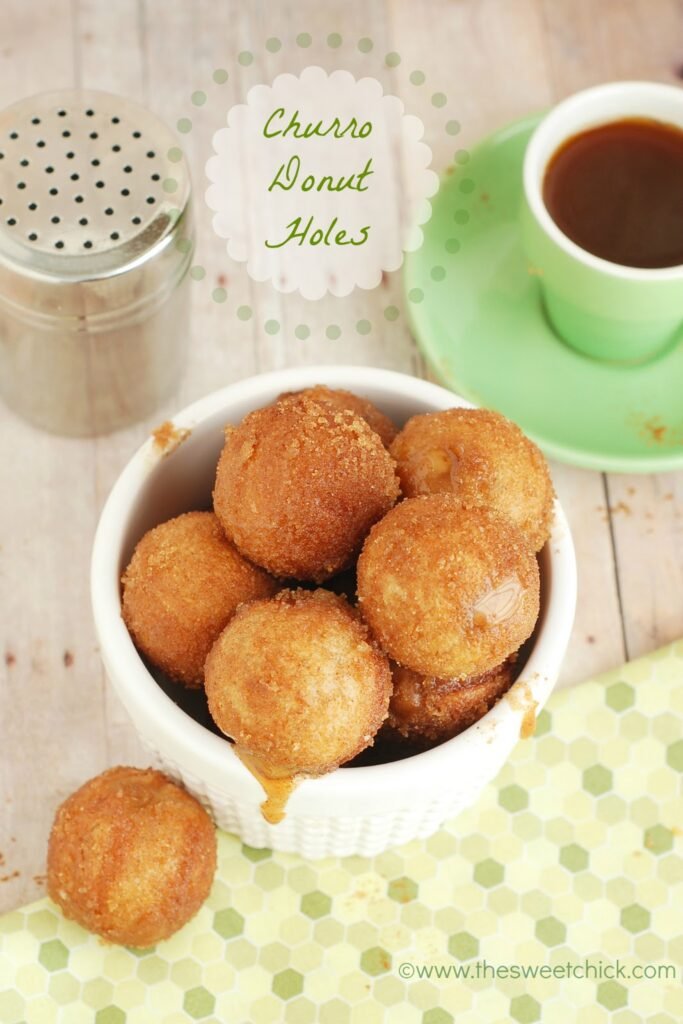
I watched a documentary about Johnny Cash last night and now I am listening to his music as I write this post. He songs remind me of driving up to Canada in my dad’s Oldsmobile Regency with my parents and oldest brother. Dad had Johnny playing on the 8-track. There is just something about his voice that is haunting. While Elvis is still my number one singer, Johnny comes in a close second. I was definitely born in the wrong era. None of this has to do with churros or donuts, I just like good music and thought I would share. Don’t worry I’ll still share the recipe for these finger-lickin’ treats.

Now I have made Churro Donuts before and they were quite tasty. This time I decided to make them a little healthier by adding Chobani yogurt. The first time I used Chobani was in my Maple Apple Muffins and they came soft and moist, so I was aiming for the same texture with these donuts. I just replaced some of the oil and buttermilk from my original recipe with yogurt. Chobani has this great chart on their blog if you want to replace butter, oil, buttermilk, or sour cream in one of your recipes. Okay so the dulce de leche and cinnamon sugar are not good for the diet, but you don’t need to eat all the donuts by yourself. (I won’t tell anyone if you do.)
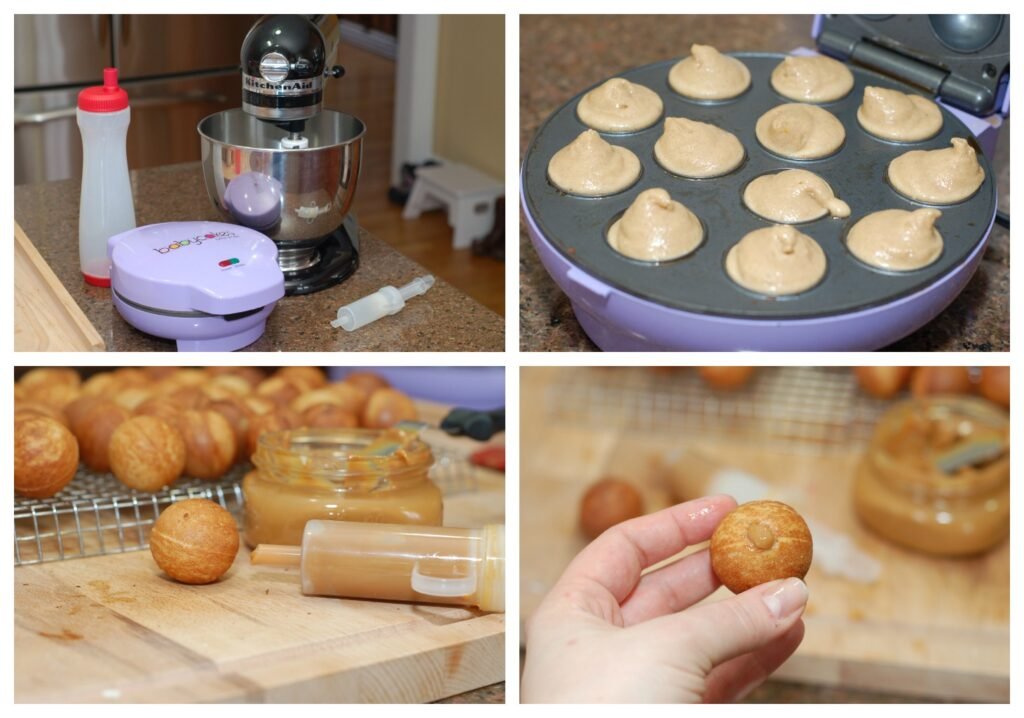
I made these donuts holes using my Babycakes Cake Pop Maker. The machine I bought came with an injector to add filling, so it was perfect to fill my donuts with my homemade dulce de leche. You can probably use the Wilton cupcake filler tip to do the same. You want to make sure that if you make your own dulce de leche or buy it, you want it to be thick, otherwise it will just seep out of your little donut holes. Another tool that is great for this project is the Tovolo pancake pen. It is so much easier to use it to fill the wells of my machine with batter than to try to do it with a spoon.
After you fill them, you just glaze them and roll them around in some cinnamon sugar. I like to use brown sugar and cinnamon. I find granulated sugar to be too gritty for me. Only after you finish all these steps can you pop one in your mouth. Yeah, right. I lost a few before I even got to fill them to my little kitchen troll that wouldn’t stop saying “donut” until I threw him at least three.
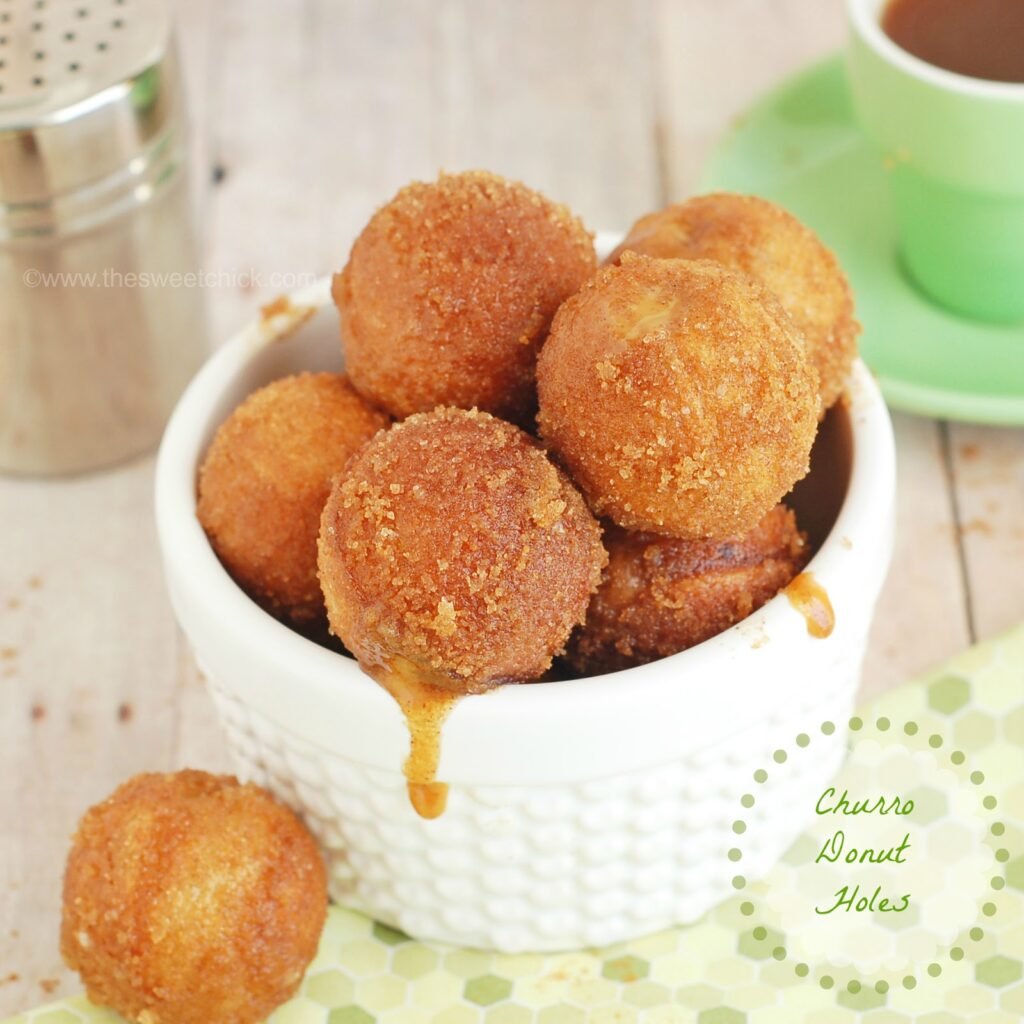
These guys are a little messy. You may need a napkin or two, but they are worth the trouble. A moist cinnamon donut with a burst of dulce de leche, coated with cinnamon sugar. If you aren’t drooling yet, you will be once you start baking. Now get to it.
Churro Donut Holes
by The Sweet Chick
Prep Time: 15-20 minutes
Cook Time: 4 minutes per batch
Keywords: bake dessert snack cinnamon dulce de leche Chobani yogurt donuts
Ingredients (55 donut holes)
For the donuts
- 1 cup Chobani yogurt (vanilla or plain)
- 1/2 cup milk
- 2 tablespoons vegetable oil
- 1 cup sugar
- 2 eggs
- 1/2 teaspoon vanilla extract
- 2 cups all purpose flour
- 4 teaspoons baking powder
- 1/2 teaspoon baking soda
- 1/4 teaspoon salt
- 1 1/2 teaspoon cinnamon
For the filling
- 1 1/4 cups dulce de leche
For the glaze
- 1 cup powdered sugar
- 1 teaspoon vanilla extract
- 4 tablespoons milk
For the coating
- 1/2 cup light brown sugar
- 1 teaspoon cinnamon
Instructions
For the donuts
Preheat your Babycakes Cake Pop Machine.
Using a hand mixer or stand mixer, beat together yogurt, milk, oil and sugar. Then add eggs and vanilla. Mix well.
In a separate bowl, stir together the dry ingredients and slowly add to to the wet ingredients, making sure to have a nice smooth mixture. The batter will be thick.
Use a Ziplock bag with tip cut off or pancake pen to fill each donut reservoir with about 2 tbsp of batter.
Bake for about 4 minutes or until toothpick inserted in center of donut comes out clean.
Place hot donuts on cooling rack.
For the filling
With the Babycakes injector or a cupcake filler, make a hole in each donut and fill with dulce de leche.
For the glaze
In a small bowl whisk together powdered sugar, vanilla, and milk. You want the consistency to be runny, not thick.
Dip each donut in the mixture and flip it around by hand or with a fork until the whole donut is covered.
Then place back on the cooling rack until the glaze is dry, but tacky.
For the coating
In a small bowl combine the brown sugar and cinnamon.
Dip each donut into the mixture and roll around until all covered. Then pop one in your mouth an enjoy the ride.
Related Posts



Subscribe for New Racipies
Get mental health tips, updates, and resources delivered to your inbox.
Pumpkin Bagels

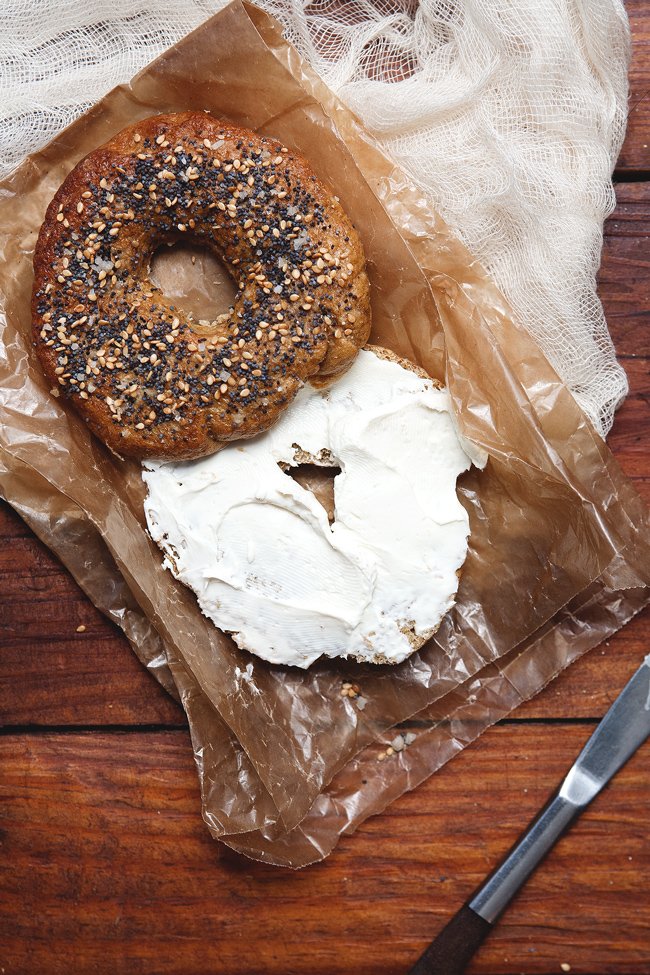
Have you ever had a Noah’s Bagels pumpkin bagel? I think it singlehandedly converted me into a bagel lover. Unfortunately (or maybe fortunately?), it’s seasonal, so it’s only obtainable one fleeting time a year, making it limited edition and therefore that much more desirable (like those mint chocolate Kisses that they sell around Christmas, have you had them?) And after I graduated from college and moved out of my college town, I stopped going to Noah’s altogether. Which is a shame, because pumpkin bagels, you have been sorely missed!
Well, I’ve got news for you. Homemade pumpkin bagels are just as good. Or, nearly as good, because in my case, they turned out rather ugly. Knobby. Imperfect, through and through. But seriously, homemade bagels, where have you been all my life? Just floating around, a vague idea in my head, that I never pulled off because I’d mistakenly thought you were really hard to make.
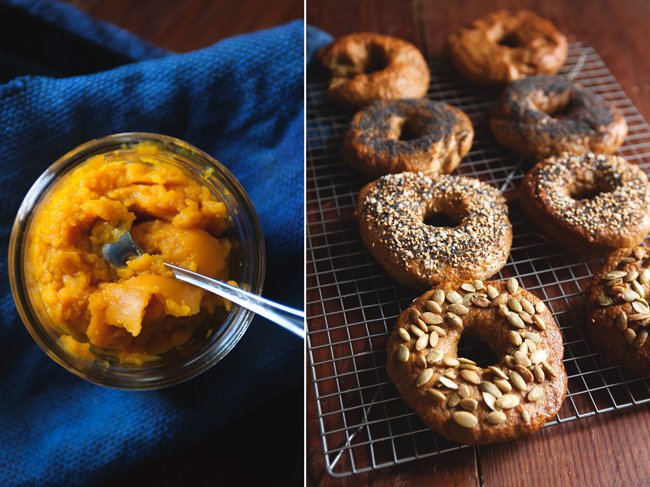
That’s the thing: these bagels were not difficult to make at all. I know that there are lots of ways to complicate the process, resulting in Bronx-worthy (and better-looking) bagels, but besides the extra step of boiling them, which admittedly was rather tense because I was trying to brush the egg wash on the cooked bagels and top them at the same time, most of the work was performed by my Kitchenaid mixer.
The bagels are so delicious when they come out of the oven. Soft but springy from the extra long bath I gave them, and laced with pumpkin. I also incorporated whole wheat flour into the recipe, resulting in the perfect fall breakfast food alongside a steaming cup of coffee. But make sure to toast them, because we all know that bagels taste best lightly toasted with a thick smear of cream cheese (the sliced tomatoes are optional. And the lox is a splurge!) But please please please don’t eat them with low-fat cream cheese. (We usually avoid low-fat products, but our grocery store had run out of the regular whipped kind.) It’s no substitute.

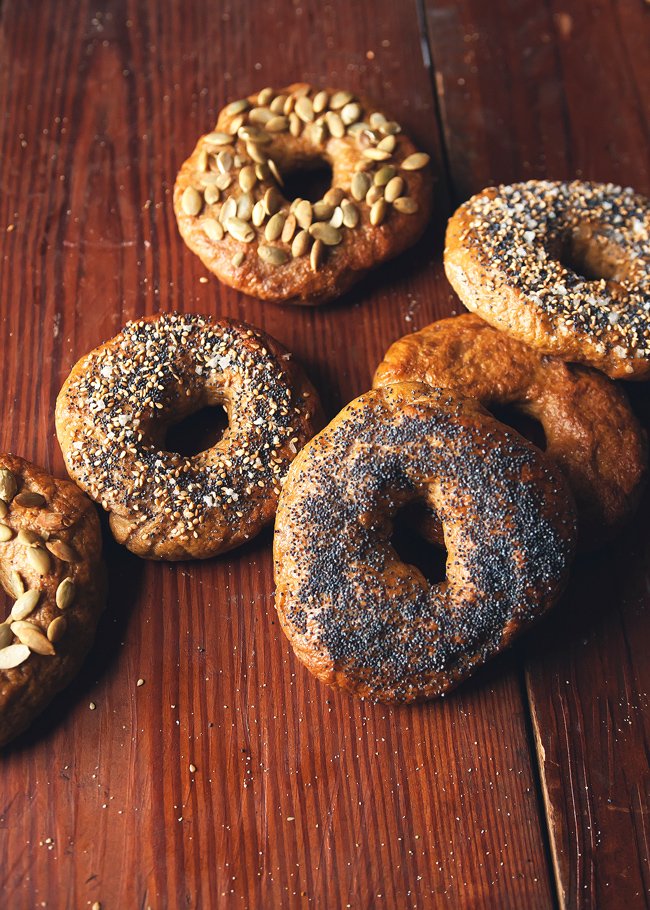
PUMPKIN BAGELS
Adapted from Honest Cooking
Makes 8
Ingredients:
- 2-1/4 tsps. active dry yeast
- 1 cup warm water
- 1/3 cup brown sugar
- 2 cups all-purpose flour
- 1 cup whole-wheat flour
- 1 tsp ground cinnamon
- 1 tsp salt
- 1/2 tsp ground nutmeg
- 1/4 tsp ground ginger
- 1/4 tsp allspice
- 1/2 cup unsweeted pumpkin puree
- 1 Tbsp baking soda
- 1 egg
- cornmeal for dusting baking pan
Toppings:
- 2:2:1 of poppy seeds
- sesame seeds
- sea salt
- poppy seeds
- pumpkin seeds
- black sesame seeds
- sesame seeds, etc.
Directions:
In the bowl of a stand mixer, combine yeast, water, and brown sugar. Whisk together and set aside.
In the meantime, in a large bowl, combine flours, cinnamon, salt, nutmeg, ginger, and allspice. By now, the yeast mixture should be frothy and ready to go. Add the pumpkin puree and using the dough hook, start mixing on low speed. Slowly add the flour mixture until it’s completely combined, about 3 to 5 minutes. At this point, the dough should be smooth and elastic, but not too sticky. If it is, incorporate 1 to 2 more Tbsps of flour.
Place dough in a bowl coated with oil and cover, allowing it to rise in a warm place until dough doubles in size, about 90 minutes.
Remove the dough and punch it down. Divide it into 8 equal pieces and roll them into balls. Cover and let rise about 20 minutes more.
At this point, using your thumb, punch a hole into the middle of the ball and widen it, taking care that the ring is even on all sides. Widen the hole more than you think necessary, because it will shrink. Set the dough on a lightly greased baking sheet. Repeat with the other balls.
Preheat your oven to 425 degrees F and get the egg wash ready.
Fill a large pot about halfway with water and bring it to a boil. When it’s started boiling, pour in the baking soda (. Then gently drop 2 to 3 bagels in and cook for 2 minutes. Flip them and cook for 2 minutes more (the longer you boil the bagels, the chewier they will turn out. I like my bagels chewy. You can boil them for 1 minute on each side if you’d like.) Once done, remove them with a slotted spoon and drain well on paper towels. Then brush them with the egg wash and top with whatever toppings you’d like. Sprinkle cornmeal on the baking pan you had set them on earlier. Place the bagels on top. Repeat the same procedure with the rest of the bagels.
Once all the bagels have been boiled, bake them in for 15 to 20 minutes, rotating the pan halfway through. Let them cool before digging in.
Related Posts


Subscribe for New Racipies
Get mental health tips, updates, and resources delivered to your inbox.