Pumpkin Gingerbread Cupcakes

We have been having some cold, wet weather here lately. This kind of weather just makes me want to stay in bed. But at least it’s not as bad as the snow and ice that some folks are getting. I surely don’t miss that. If bad weather keeps me in the house, I usually end up baking something. I had some leftover pumpkin puree in the pantry that I wanted to use and I thought it would pair nicely with gingerbread. I was right!

I also had some Crystallized Ginger Chips I have been dying to use. I bought these at World Market, but I also have seen them at T.J. Maxx, Sur la Table, and Amazon.com.

The spices all together smell so wonderful. I need to get myself a gingerbread candle or room spray.
Here comes the pumpkin. I love how pumpkin makes baked goods so nice and moist. I hate dry cupcakes.

The crystallized ginger chips are what really make this cupcake pop. They have a strong ginger taste with a little bit of sweetness. A great compliment to all the other spices.

Napkins com sent me a few samples of baking cups, mini loaf liners, and paper straws to try out. The baking cups are made of a glossy, translucent paper with beautiful silver and red designs. I didn’t even need a muffin pan for these. I love the scalloped edges. You can find out more about them on their website. They sell in bulk wholesale, but with the holidays coming around and all the parties you may be attending, wouldn’t it be nice to have pretty and durable baking liners.
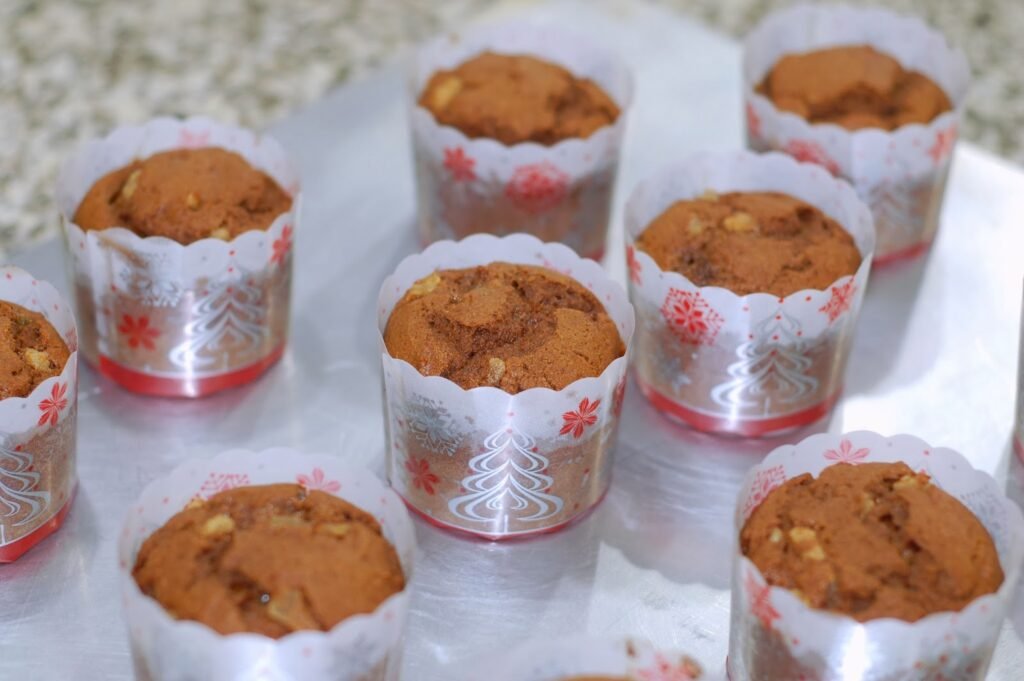
My muffins came out perfect. The baking cups really held up. They are oven and freezer safe, so you can bake ahead of time. Napkins com has other decorative baking cups available as well as napkins, plates, tablescloths, cups and cutlery in a rainbow of colors for all your party needs. They even have eco-friendly and custom print products.

I tried the mini loaf liners also. I made some bread to give out as gifts. These are the perfect size for a single serving. There are bigger loaf liners available if you need them.

Getting back to the cupcakes, the original frosting I had intended was an eggnog buttercream frosting, but it was too sweet and heavy. I thought it was take away from all the wonderful ginger flavor of the cupcakes. I would have gone with my usual whipped mascarpone frosting, but I didn’t have any whipping cream or mascarpone cheese in the fridge.

But I did have some cream cheese and Cool Whip. I found an easy recipe online for a light fluffy frosting. I like how it came out. The light taste of the frosting was the perfect pairing for my spice cupcakes and it had a nice glossy sheen that reminded me of snow. The cupcakes came out of the wrapper in perfect condition, the inside of the cupcake was moist with lots of bits of chewy ginger chips, and the frosting was just the right amount of sweet with a hint of cream cheese. I definitely had a winner.
Pumpkin Gingerbread Cupcakes
by The Sweet Chick
Prep Time: 20 minutes
Cook Time: 20 minutes
Keywords: bake dessert snack ginger cinnamon cloves pumpkin Christmas cupcake cake American winter
Ingredients (12 cupcakes)
For the cupcakes
- 1 cup all purpose flour
- 3/4 cup whole wheat flour
- 1 teaspoon baking soda
- 2 teaspoons ground cinnamon
- 1 teaspoon ground ginger
- 1/4 teaspoon ground cloves
- 1/4 teaspoon ground nutmeg
- 1/4 teaspoon salt
- 1/2 cup butter, melted
- 1/2 cup dark brown sugar
- 1/2 cup molasses
- 1 large egg
- 1/4 cup water
- 1/2 cup pumpkin puree
- 1/2 cup crystallized ginger chips
For the frosting
- 4 oz. cream cheese
- 1/2 cup powdered sugar
- 1/4 teaspoon vanilla extract
- 8 oz. Cool Whip whipped topping
Instructions
For the cupcakes
Preheat oven to 350ºF.
In a medium bowl, mix together the flours, baking soda, spices, and salt until well blended.
In a large bowl or stand mixer place the butter, sugar, molasses, and egg. Mix on low until well blended. Then add the water and pumpkin puree mixing until smooth.
Add the dry ingredients to the wet mixture a little at a time as you continue to mix, making sure all ingredients are fully combined.
Next add the ginger chips and mix until all incorporated.
Divide batter evenly into 12 cupcake liners or a greased muffin pan. Bake for 20 minutes or until a toothpick inserted in the center comes out clean.
Remove from oven and place on cooling rack. Cool completely before frosting.
For the frosting
In a medium bowl or stand mixer, combine cream cheese, sugar and vanilla. Mix until smooth.
Then add Cool Whip and continue to mix until well combined.
Using a piping bag with your favorite tip or a spatula, frost your cupcakes and place in the fridge. (If there is any left over frosting, it makes great fruit dip!)
Keep refrigerated until ready to serve.
Cupcake recipe adapted from King Arthur Flour
Frosting recipe adapted from Babble com
Disclaimer: Napkins com did provide me with some of the products used in this post, but I was under no obligation to develop a recipe for them nor provide a favorable review. All thoughts and opinions are my own.
This recipe may be linked to these fabulous parties.
Is Sauerkraut Safe for Acid Reflux? Benefits and Risks

Sauerkraut, a popular fermented food made from cabbage, has been praised for its potential health benefits, including improving gut health, boosting the immune system, and offering a rich source of probiotics. As with any food, those dealing with acid reflux or gastroesophageal reflux disease (GERD) may be concerned about whether sauerkraut is safe to consume, given its acidic nature and fermentation process.
In this article, we will explore the effects of sauerkraut on acid reflux, the potential benefits, and risks of including sauerkraut in an acid reflux-friendly diet, and offer practical tips on how to incorporate it into your meals.
What is Sauerkraut?
Sauerkraut is made by fermenting finely chopped cabbage with salt, a process that promotes the growth of beneficial bacteria, or probiotics. This fermentation process not only enhances the flavor but also increases the nutritional value of the cabbage, providing a source of fiber, vitamin C, and various B vitamins.
The probiotics in sauerkraut, such as lactic acid bacteria, support digestive health by promoting a healthy balance of gut bacteria. This can improve digestion and immune function. However, as a fermented food, sauerkraut has a distinct tart, sour taste due to the lactic acid produced during fermentation.
Is Sauerkraut Acidic?
Sauerkraut’s acidic nature stems from the lactic acid produced during fermentation. As a result, sauerkraut has a low pH (usually around 3.0 to 3.5), making it acidic. This can raise concerns for individuals with acid reflux, as acidic foods may exacerbate the condition by irritating the esophagus and increasing acid production in the stomach.
However, the acidity of sauerkraut is not the only factor to consider when evaluating its impact on acid reflux. The presence of probiotics and other nutrients in sauerkraut may play a significant role in how it affects digestion and acid reflux symptoms.
Related to Read: Sauerkraut for Acid Reflux: A Tangy Delight or a Heartburn Trigger?
Sauerkraut and Acid Reflux: The Potential Benefits
While sauerkraut is acidic, it may offer several digestive health benefits that could help manage acid reflux symptoms for some individuals. Let’s explore how sauerkraut could be beneficial:
- Probiotics and Gut Health:
- Sauerkraut is a probiotic-rich food, meaning it contains beneficial bacteria that can improve gut health. Research has shown that a healthy gut microbiome can play a role in preventing and managing acid reflux. Probiotics may help balance the gut flora and promote better digestion, which could reduce the likelihood of reflux symptoms.
- Improved Digestion:
- The probiotics in sauerkraut help break down food more efficiently, reducing the burden on the stomach. This could lead to improved digestion, helping to prevent bloating, indigestion, and acid reflux symptoms. Sauerkraut can also support overall gastrointestinal health, contributing to smoother digestion.
- Anti-Inflammatory Effects:
- Sauerkraut contains antioxidants and compounds that may help reduce inflammation in the digestive tract. Chronic inflammation in the esophagus is a key factor in acid reflux and GERD. By reducing this inflammation, sauerkraut might provide some relief for those with acid reflux.
- Alkalizing Effect After Digestion:
- Although sauerkraut is acidic in nature, fermented foods can have an alkalizing effect on the body once digested. This means that after the fermentation byproducts are processed, the body may experience a reduction in acidity, which could benefit those with acid reflux.
Author Tip: 7 Kinds of Foods to Avoid with GERD
Sauerkraut and Acid Reflux: The Potential Risks
While sauerkraut offers several digestive health benefits, it may not be suitable for everyone with acid reflux. Here are some potential risks to keep in mind:
- High Salt Content:
- One of the primary concerns with sauerkraut for individuals with acid reflux is its high salt content. Too much salt can contribute to water retention and high blood pressure, and may also irritate the stomach lining. Some people with acid reflux may be sensitive to salty foods, which could worsen symptoms like bloating and indigestion.
- Fermented Foods and Gas Production:
- Sauerkraut contains fiber and fermented sugars (oligosaccharides), which can produce gas during digestion. For some individuals, this may lead to bloating, discomfort, and increased pressure on the stomach, which could trigger acid reflux or worsen existing symptoms.
- Acid Sensitivity:
- While sauerkraut may be beneficial for some, its acidic nature might aggravate symptoms in others. If you are sensitive to acidic foods, sauerkraut could potentially worsen acid reflux by increasing stomach acidity or irritating the esophagus.
- Portion Control:
- Consuming large amounts of sauerkraut in one sitting could potentially lead to indigestion or exacerbate acid reflux symptoms. Moderation is key when incorporating sauerkraut into your diet.
How to Include Sauerkraut in an Acid Reflux-Friendly Diet?
If you have acid reflux but would like to try incorporating sauerkraut into your meals, here are some practical tips:
- Start with Small Portions:
- Begin with small amounts of sauerkraut to see how your body reacts. If you experience any discomfort, it may be best to reduce your intake or avoid it altogether.
- Choose Low-Sodium Sauerkraut:
- Look for low-sodium or homemade sauerkraut options to reduce the amount of salt in your diet. Excessive salt can aggravate acid reflux symptoms.
- Pair Sauerkraut with Alkaline Foods:
- If you’re concerned about the acidity of sauerkraut, pair it with alkaline foods like leafy greens, cucumbers, or bananas. This can help balance out the acidity and create a more reflux-friendly meal.
- Avoid Sauerkraut on an Empty Stomach:
- For some people, eating sauerkraut on an empty stomach might trigger acid reflux symptoms. Try consuming it with other foods to reduce the likelihood of irritation.
Author Tip: 7-Day Meal Plan For Gastritis
Scientific Research on Sauerkraut and Acid Reflux
While there is limited specific research on the effects of sauerkraut on acid reflux, studies on fermented foods and probiotics provide some insight:
Study 1: Probiotics and GERD A study published in the World Journal of Gastroenterology suggests that probiotics may help manage symptoms of acid reflux and GERD. Probiotics improve gut health and digestion, which could lead to fewer reflux episodes. As sauerkraut is rich in probiotics, it could potentially support these benefits.
Study 2: Effects of Fermented Foods on Digestion Research has shown that fermented foods like sauerkraut can support digestion by introducing beneficial bacteria into the gut, which aids in the breakdown of food. This could help reduce digestive discomfort and prevent the build-up of stomach acid, a key contributor to acid reflux.
Conclusion
So, is sauerkraut safe for acid reflux? The answer depends on your individual sensitivity to acidic foods and your overall digestive health. While sauerkraut’s acidic nature and high salt content might trigger reflux symptoms in some individuals, its probiotic-rich composition can offer potential benefits for others by promoting better digestion and a balanced gut microbiome.
If you have acid reflux, it’s best to start with small amounts of sauerkraut and pay attention to how your body reacts. Choosing low-sodium varieties and pairing sauerkraut with other alkalizing foods can help make it a more reflux-friendly option.
As always, consult with a healthcare provider before making any significant changes to your diet, especially if you have chronic acid reflux or GERD.