Tropical Dream Rice Krispie Treats

And the craziness continues. We finally found a buyer for our house, that meant we had to go look for a new home. Last weekend, my mom watched the kids as my husband and I drove fourteen hours down south to look at houses. We must have looked at about thirty houses the first day and that was all in six hours. After already owning two houses, we know what we want and what we don’t. Our realtor was awesome, he was patient and understanding. We were supposed to spend two days looking at house, but since we saw most of our list the first day, we ended up finding “the one” that day. Now it’s time to start packing!

In the meantime, Oh! Nuts sent me an email asking if I wanted samples of their product to try in my recipes. Who am I to say no to dried fruits and nuts. They had so many options to choose from. Just check it out for yourselves here. I ended up choosing dried guava slices and dried pineapple tidbits. I was in a tropical mood.

Of course, we had to do some taste testing first. I had no doubt my daughter would like them, she eats anything. Her brother, Mister Picky, is finicky about what goes in his mouth. I was surprised that he even wanted to try the guava and pineapple. And I was even more surprised when he asked for more. I don’t blame him, they are pretty good.

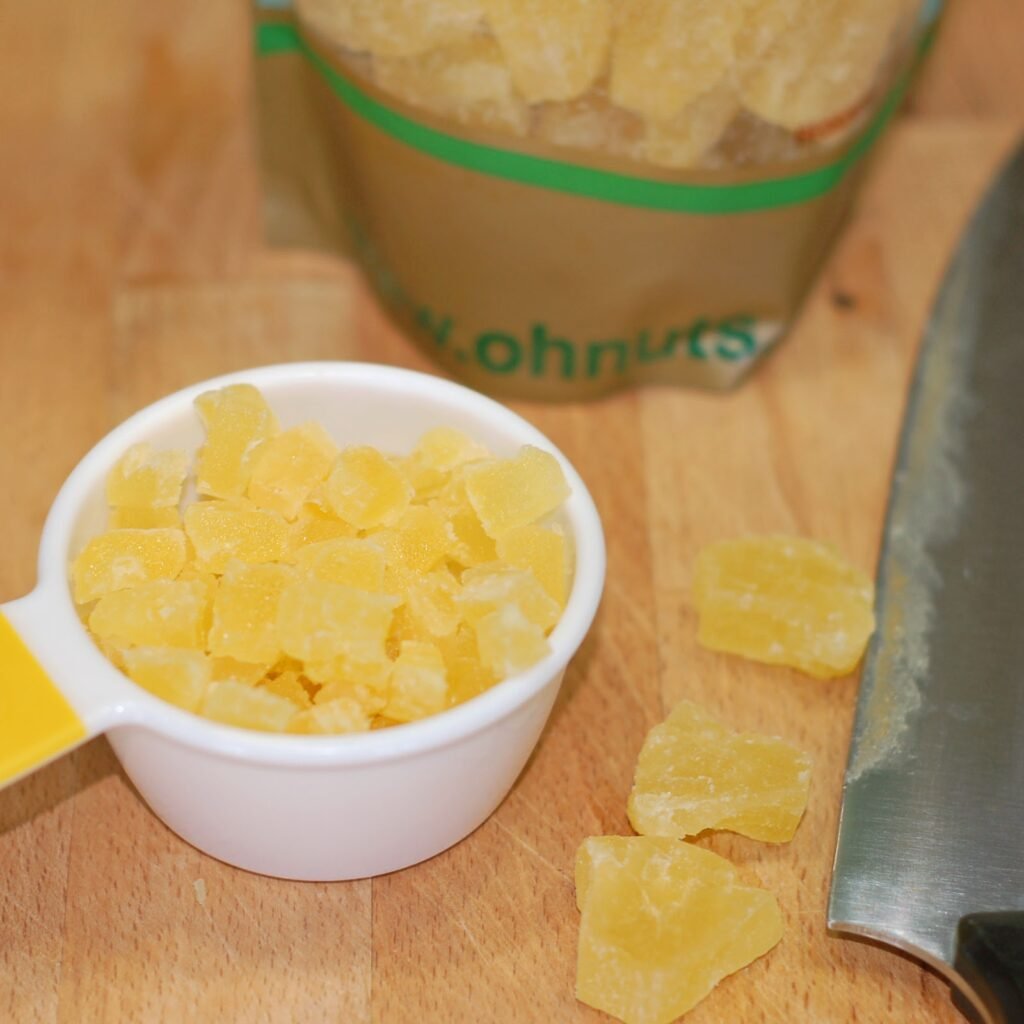
Since I was in a tropical mood, I thought some tropical Rice Krispie treats were in order. I chopped up the quava slice and the pineapple tidbits into smaller pieces and added them to the treats along with some macadamia nuts, white chocolate and a little coconut flavor to round it out.

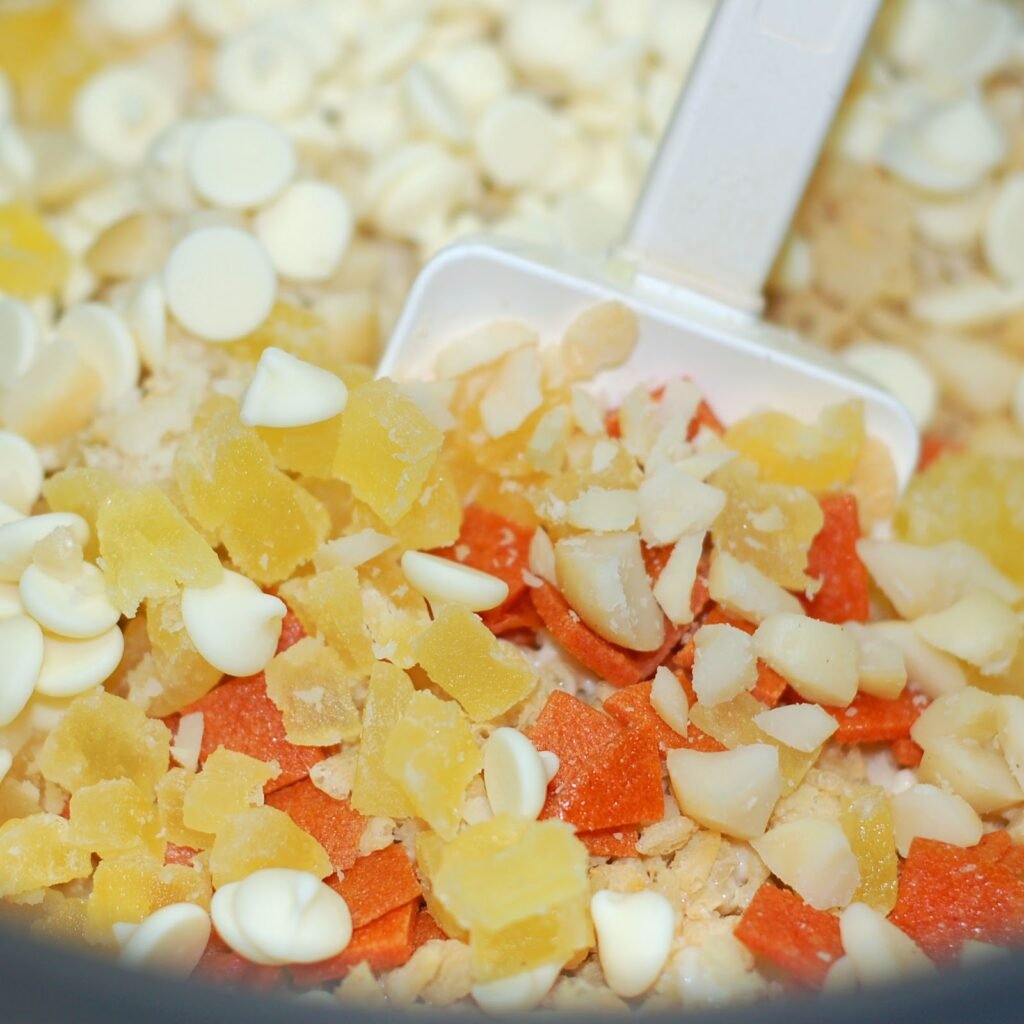
I had never thought to buy coconut extract before, but boy does it smell delightful. Most of the dried fruit I cut up did end up in the recipe. I may have lost a piece or two when I turned my back on the minions. They sure are sneaky.

Now comes the topping. I wanted something light, fluffy, and coco-nutty. On my Lime Coconut Rice Krispie Treats with Tequila, I just used shredded coconut and marshmallow fluff, but this time I wanted to use to coconut cream and some toasted coconut.
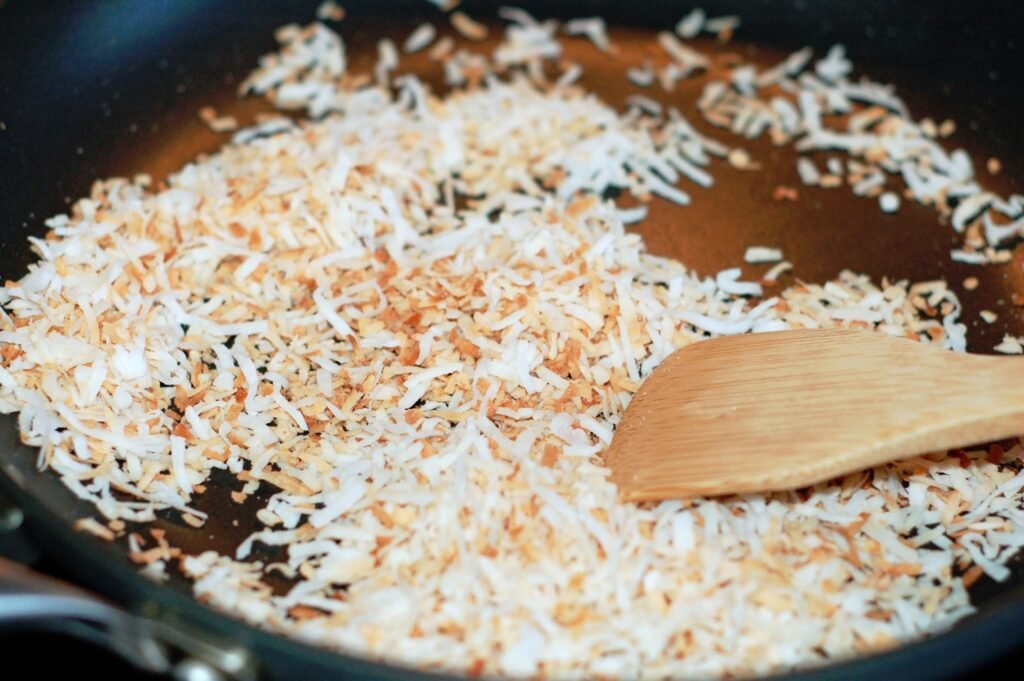
I toasted up some sweetened coconut flakes in a pan until it was to my liking. Then I whipped up some marshmallow fluff, cream of coconut, and vegetable shortening together to make the fluffy frosting.

I was really looking for coconut cream, but didn’t find it. I was grocery shopping with the two little minions and they didn’t have the patience to look up and down every aisle. So cream of coconut it was. It is already sweetened and it is used mostly for drinks, but it works in a pinch. The cream of coconut still has a lot of liquid, but if you put the can overnight in the fridge, the fat will come to the top and you just scoop out what you need for the frosting. Or you can throw it in the freezer for a bit. Just try to get as much of the thick fatty part into the frosting as possible, so you have a fluffier frosting.

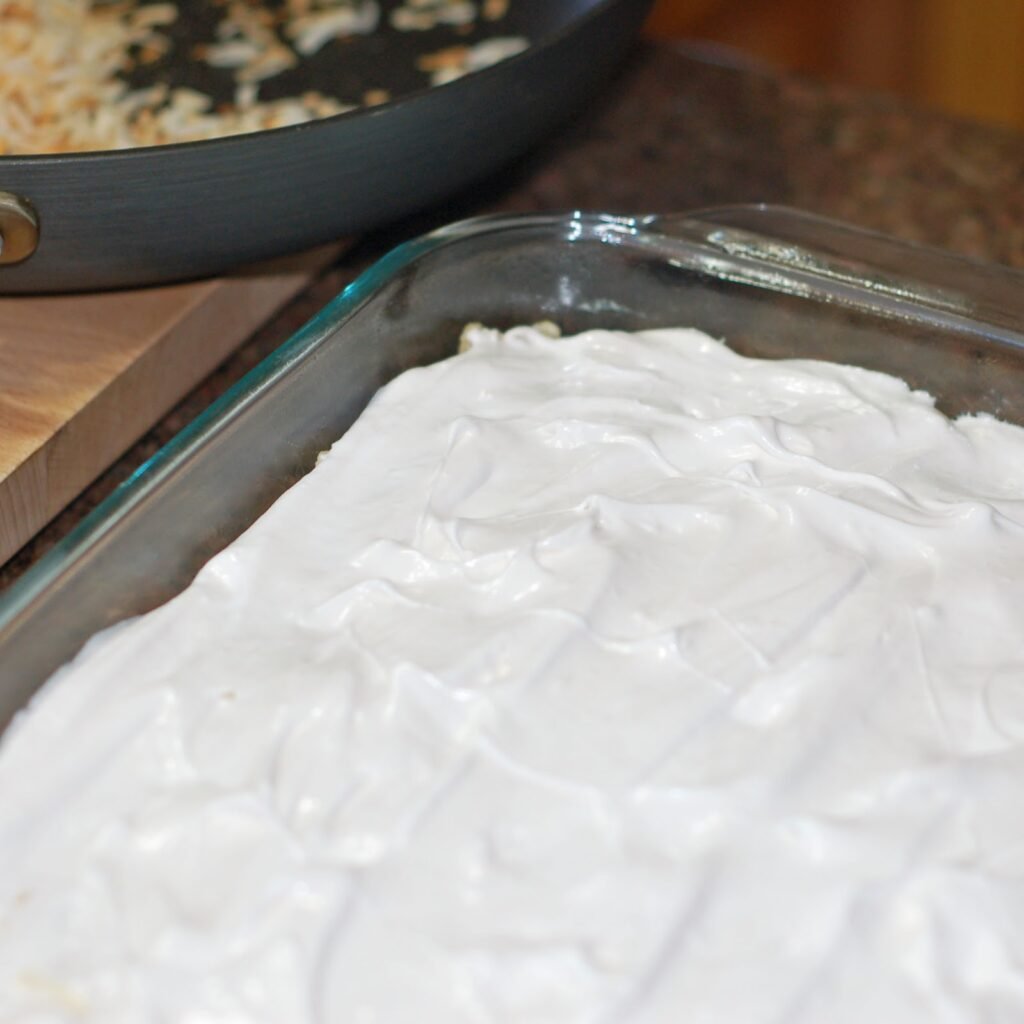
Then just spread on the coconut frosting and sprinkle it with the toasted coconut. Pop the whole thing in the fridge for an hour or two and it is ready to be sliced and eaten.
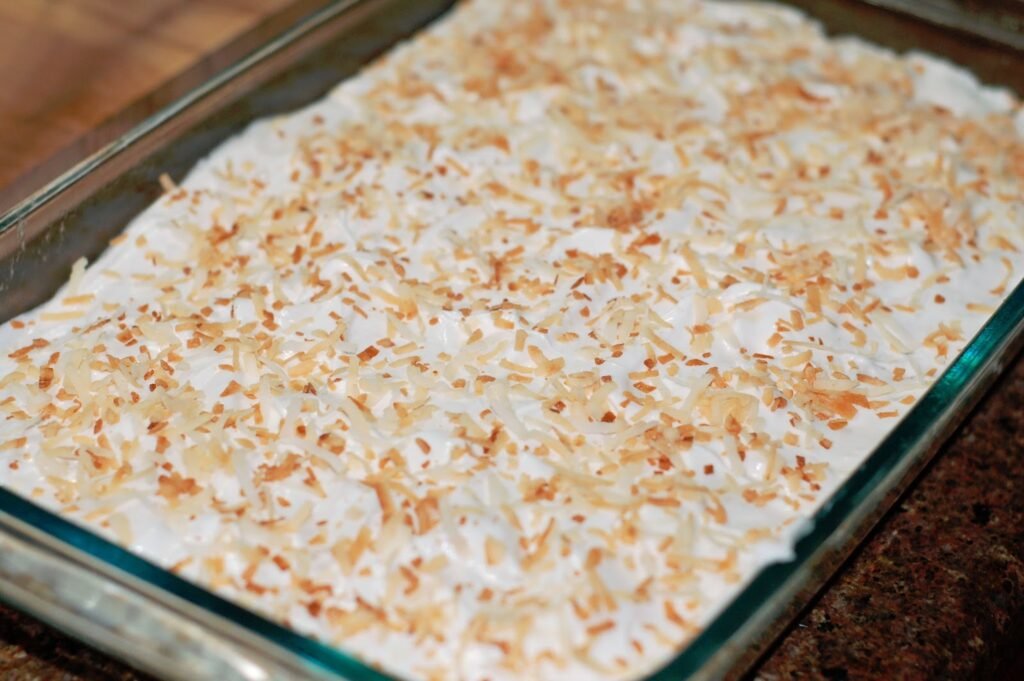
It really does taste like a tropical dream. Lots of coconut, pineapple, and guava flavor. Thanks Oh! Nuts for the inspiration. Now I need to get back to packing. I guess all that free time that I thought I was going to have after becoming a stay at home mom at the beginning of this month is not going to be so free anymore. But it is all for the better. I can’t wait to bake in my new kitchen!

Tropical Dream Rice Krispie Treats
by The Sweet Chick
Prep Time: 20 minutes
Cook Time: 5 minutes
Keywords: no bake dessert snack coconut pineapple guava marshmallow fluff bars rice krispie treats American summer
Ingredients (24 bars)
For the treats
- 4 tablespoons butter
- 5 cups mini marshmallows
- 1 teaspoon coconut extract
- 6 cups Rice Krispie (or generic) cereal
- 1/2 cup chopped, Oh! Nuts dried guava slices (about 4 slices)
- 1/2 cup chopped, Oh! Nuts dried pineapple tidbits
- 1/2 cup white chocolate chips
- 1/3 cup chopped, macadamia nuts
For the frosting
- 1/2 cup vegetable shortening
- 1 cup marshmallow fluff
- 1 1/4 cup cream of coconut
For the topping
- 1/2 cup sweetened coconut flakes
Instructions
For the treats
In a large sauce pan, melt butter and marshmallows over low heat. Stir until completely melted.
Remove from heat and add coconut extract. Stir until completely mixed.
Then add the cereal, pineapple, guava, chocolate chips, and nuts. Mix until all is well incorporated.
Then pour the mixture into a greased 9 x 13 pan or a cookie sheet and spread it evenly with a piece of waxed paper.
Place in fridge to cool and set.
For the frosting
In a stand mixer with a whisk attachment, whisk together the shortening, fluff and cream of coconut on medium speed, slowly increasing to fast speed until frosting is light and fluffy like a meringue.
Spread frosting evenly over the treats.
For the topping
Place coconut flakes in a medium frying pan and cook over medium heat on the stove top until flakes are a golden brown. About five minutes. Stir occasionally so that the flakes don’t burn.
Sprinkle the toasted flakes over the frosting and place the treats back in the fridge for an hour or two for the frosting to set.
Then cut into squares and take a bite!
Disclaimer: Oh! Nuts did provide me with some of the products used to make this recipe, but I was under no obligation to develop a recipe for them nor provide a favorable review. All thoughts and opinions are my own.
Is Celery Acidic? Celery for Acid Reflux: Good or Bad?

Celery, a staple in many diets, is widely recognized for its crunch, low calorie count, and health benefits. But for those suffering from acid reflux or GERD (gastroesophageal reflux disease), the question arises: “Is celery acidic? Is celery for acid reflux a good choice or a potential trigger?” In this article, we will dive into the pH level of celery, its potential effects on acid reflux, and how to incorporate it into a reflux-friendly diet. By the end, you’ll have a clear understanding of whether celery can be your ally in managing acid reflux.
Is Celery Acidic? Understanding Its pH Level
Celery is classified as an alkaline food, with a pH level ranging from 5.7 to 6.0. While not as alkaline as some other vegetables, celery is still considered a low-acid option. Here’s a quick comparison:
| Food Item | pH Range | Acidity Level |
| Celery | 5.7–6.0 | Low Acid/Neutral |
| Spinach | 6.5–7.0 | Alkaline |
| Cucumber | 6.0–7.0 | Alkaline |
| Tomatoes | 4.0–4.6 | Alkaline |
Celery’s alkaline nature makes it a popular choice for individuals looking to balance their diet and reduce acidity. Its ability to help neutralize stomach acid has made it a go-to food for those managing acid reflux.
Related to Read: Is Bok Choy Safe for Acid Reflux?
Nutritional Benefits of Celery: A Powerhouse of Health
Celery isn’t just about its alkalinity; it’s a nutrient-rich vegetable offering numerous health benefits:
- High Water Content: With over 95% water, celery keeps you hydrated and aids in digestion.
- Rich in Antioxidants: Contains flavonoids, beta carotene, and vitamin C, which combat oxidative stress.
- Dietary Fiber: Promotes gut health and regular bowel movements.
- Low in Calories: A perfect snack for those looking to manage their weight.
- Anti-Inflammatory Properties: Contains phytonutrients that may reduce inflammation in the body.
Can Celery Help with Acid Reflux? Exploring Its Impact
Celery is often recommended as a reflux-friendly food due to its alkalinity and digestive benefits. Here’s how celery might help:
1. Neutralizes Stomach Acid
The alkaline nature of celery can help balance stomach acid levels, reducing the likelihood of acid reflux symptoms.
2. Supports Digestion
Celery’s fiber content aids in smooth digestion, preventing issues like bloating and indigestion that can exacerbate acid reflux.
3. Low-Fat Content
High-fat foods can trigger acid reflux by relaxing the lower esophageal sphincter (LES). Celery, being naturally low in fat, avoids this problem.
4. Hydration
The high water content in celery helps dilute stomach acid, potentially preventing reflux episodes.
Related to Read: Is Cabbage Juice Acidic?
How to Include Celery in a Reflux-Friendly Diet?
To maximize celery’s benefits while minimizing any potential discomfort, consider these tips:
1. Eat It Raw
Raw celery retains its crunch, nutrients, and alkalinity. Pair it with a reflux-safe dip like hummus.
2. Add to Smoothies
Blend celery with alkaline fruits like bananas and spinach for a refreshing, reflux-friendly smoothie.
3. Incorporate into Soups
Cooking celery in low-acid soups can make it easier to digest without compromising its benefits.
4. Avoid High-Acid Pairings
Skip pairing celery with acidic ingredients like tomatoes or citrus-based dressings.
5. Drink Celery Juice
While slightly less fiber-rich, celery juice is another way to enjoy its alkalinity. Start with small servings to gauge your tolerance.
Author Tip: 7-Day Meal Plan For Gastritis
Potential Risks of Celery for Acid Reflux
Though celery is generally well-tolerated, it’s not entirely risk-free:
- Bloating: Excessive consumption may cause bloating in sensitive individuals.
- Allergic Reactions: Rarely, celery can trigger allergic responses in some people.
- Pesticide Residue: Opt for organic celery or wash thoroughly to avoid exposure to pesticides.
Author Tip: 7 Kinds of Foods to Avoid with GERD
Celery vs. Other Vegetables for Acid Reflux
How does celery compare to other vegetables in managing acid reflux?
| Vegetable | Acidity Level | Reflux-Friendly |
| Celery | Low Acid | Yes |
| Spinach | Alkaline | Yes |
| Broccoli | Alkaline | Yes |
| Onions | Acidic | No |
Celery stands out as a versatile, reflux-friendly vegetable, suitable for most diets.
Related to Read: Are Broccoli Acidic?
FAQs About Celery and Acid Reflux
1. Is celery good for acid reflux?
Yes, celery is alkaline and can help neutralize stomach acid, making it a good choice for acid reflux sufferers.
2. Can celery juice worsen acid reflux?
Unlikely, but individual tolerances vary. Start with small amounts to ensure it doesn’t trigger symptoms.
3. How much celery should I eat daily for acid reflux?
Aim for 1–2 stalks or half a cup of chopped celery daily as part of a balanced diet.
4. Are cooked celery and raw celery equally beneficial?
Both forms are beneficial, but cooking celery can make it easier to digest for some people.
5. Can celery replace medication for acid reflux?
While celery may alleviate symptoms, it’s not a substitute for prescribed medication. Always consult a healthcare provider for severe or persistent reflux.
Conclusion: Is Celery a Good Choice for Acid Reflux?
Celery’s low acidity, high water content, and digestive benefits make it an excellent option for managing acid reflux. Its versatility allows for easy incorporation into various meals, whether raw, cooked, or juiced. While individual results may vary, most people with acid reflux can enjoy celery without concern. By adding celery to your diet mindfully, you can take a step toward better digestive health and overall well-being.